Mark Zuckerberg is quietly pushing Meta into a new phase of artificial intelligence by building an AI agent designed to assist with his role as CEO. The goal is not to replace leadership, but to reduce delays, speed up decisions, and handle routine tasks that usually require his direct attention. Reports from Futurism citing The Wall Street Journal, suggest this system acts like a digital extension of Zuckerberg, capable of answering employee questions and retrieving internal information instantly.
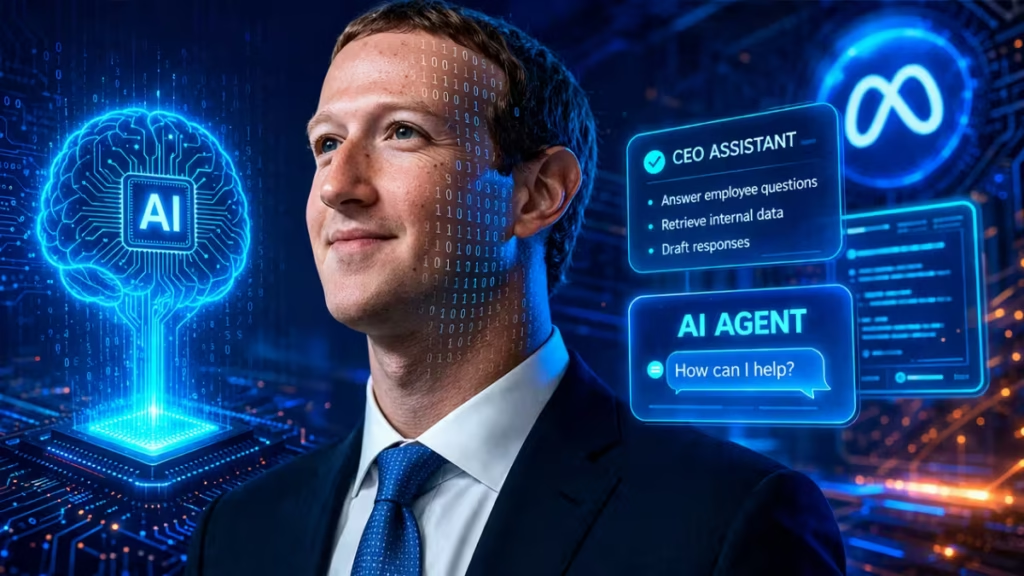
This AI agent is being trained on a massive pool of Zuckerberg’s personal and professional data, including past emails, meeting recordings, and internal messages. By learning how he communicates and makes decisions, the system can respond to employees in a way that closely mirrors his thinking.
Instead of waiting for approvals or clarifications from the CEO, teams can interact with the AI and continue their work without delays. This approach helps Meta move faster while reducing the need for constant executive involvement in smaller decisions.
Why Meta Is Betting Big on AI Agents
Meta’s investment in this technology reflects a larger strategy to become an AI-first company. Zuckerberg has already emphasized the importance of using AI tools to improve productivity and simplify company structure. By introducing systems like this, Meta aims to reduce management layers and allow employees to accomplish more on their own.
The idea is to shift focus away from hierarchy and toward efficiency, where individuals can rely on AI to access information and make informed decisions quickly.
This project also highlights the growing role of AI agents, which go beyond traditional chatbots. Unlike basic tools that generate responses, AI agents can take actions, interact with systems, and operate with a level of independence. Inside Meta, similar tools are already being used as personal assistants, document search systems, and even communication bridges between teams. In some cases, AI agents are interacting with each other, creating automated workflows that reduce manual effort.
However, this rapid adoption comes with clear risks. In one reported incident highlighted in the same reporting, an internal AI agent shared incorrect technical guidance without approval, and another employee acted on that information.
The mistake led to sensitive data being exposed for a short period, showing how quickly problems can escalate when AI operates without proper oversight. This raises important concerns about accuracy, accountability, and the need for strong safeguards when deploying AI at scale.
Zuckerberg’s experiment reflects a broader shift happening across the tech industry. AI is no longer limited to writing assistance or automation; it is moving into decision-making and leadership support. Instead of replacing executives, these systems are designed to extend their capabilities by handling repetitive work and internal communication. This allows leaders to focus more on long-term strategy while AI manages day-to-day interactions.

