Adobe has taken a major step forward in generative AI. Its Firefly platform can now learn directly from your own artwork and replicate your unique creative style. This update shifts AI from generic image generation toward personalized, creator-controlled workflows.
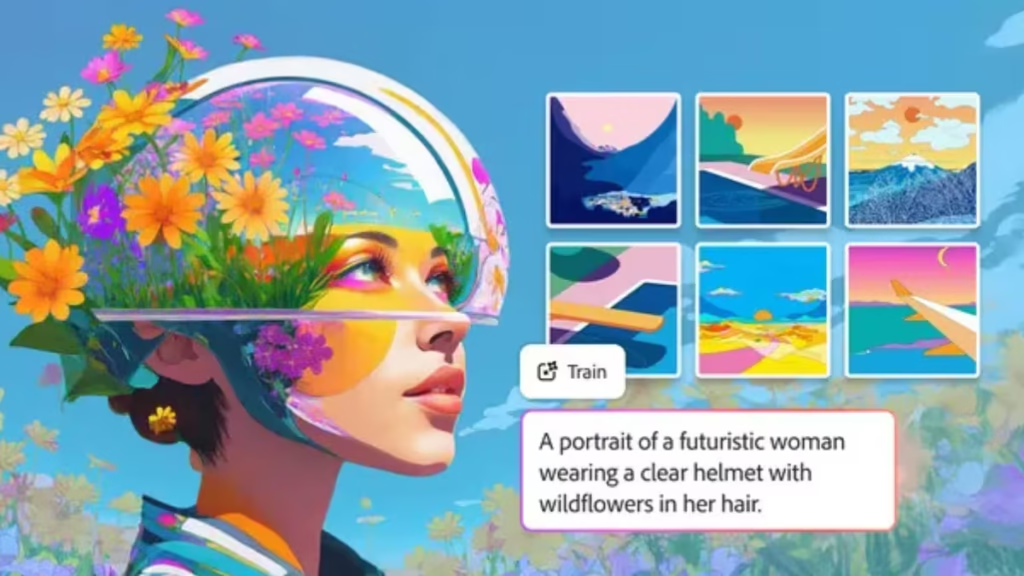
Instead of relying on prompts alone, creators can now train Firefly using their own images. The system learns patterns like color, composition, lighting, and character details, then applies them when generating new content. This change gives users more control and consistency across projects.
Firefly Custom Models Bring Personalization to AI
The biggest highlight of this update is Firefly Custom Models, now available in public beta. These models allow creators to upload their own assets and turn them into reusable AI styles.
Once trained, the model becomes part of your workflow. You can generate visuals that match your exact aesthetic without repeating manual adjustments. This is especially useful for:
- Character design consistency
- Brand-specific illustrations
- Repeating photographic styles
Firefly preserves fine details like stroke weight, color palette, and lighting across generations. That means you no longer start from scratch every time you create something new.
How Adobe Firefly Custom Models Enable Creator-Controlled AI Output
AI-generated images often feel generic because they lack a defined identity. Adobe’s new approach solves that problem by letting users define the style themselves.
This changes how creators interact with AI tools. Instead of trial-and-error prompting, the workflow becomes more direct and intentional. You guide the system using your own creative language, not just text commands.
For designers and content teams, this also means faster production without sacrificing consistency.
Built With Ownership and Privacy in Mind
Adobe is clearly addressing concerns around AI ownership. Firefly custom models train only on user-provided content, not scraped data.
The platform also requires users to confirm they have rights to uploaded assets. In addition, Firefly checks for content authenticity credentials and blocks restricted assets when needed.
Your trained models remain private by default. This ensures your style and content stay under your control, not shared across the broader AI system.
More Models and Tools in One Place
Firefly is evolving into a full creative AI studio. It now supports over 30 models from different providers, including Adobe, Google, OpenAI, and Runway.
Creators can:
- Generate content with one model
- Refine it using another
- Edit results using Adobe tools
Adobe has also introduced new features like Quick Cut, which turns raw video into structured edits, and improved image editing tools for object removal and scene extension.
This integration removes friction from the creative process and keeps everything in one environment.
From Prompts to Conversations: The Next Step in AI Tools
Adobe is also experimenting with conversational AI workflows. Its upcoming system, called Project Moonlight, lets users describe ideas in natural language while AI agents execute them across apps like Photoshop and Acrobat.
Instead of typing prompts repeatedly, creators can interact with AI like a collaborator. This approach makes the process feel closer to how real creative work happens.
Moonlight is currently in private beta, but it signals where AI tools are heading next.
This update marks a clear shift in AI development. The focus is no longer just on generating content quickly but on generating content that feels personal and consistent.
For creators, this means:
- Better control over output
- Faster workflows
- Stronger brand identity
For the industry, it signals a move toward AI systems that adapt to users instead of forcing users to adapt to them.
While questions about long-term impact remain, one thing is clear, AI is no longer just about automation. It is becoming an extension of the creator.

