January in Animal Crossing: New Horizons is a quiet month for new critters in the Northern Hemisphere and an incredibly active month for collectors in the Southern Hemisphere. Whether you’re filling your Museum, hunting high-value beetles, or simply trying to keep track of seasonal spawns, knowing exactly what appears in January makes planning much easier.
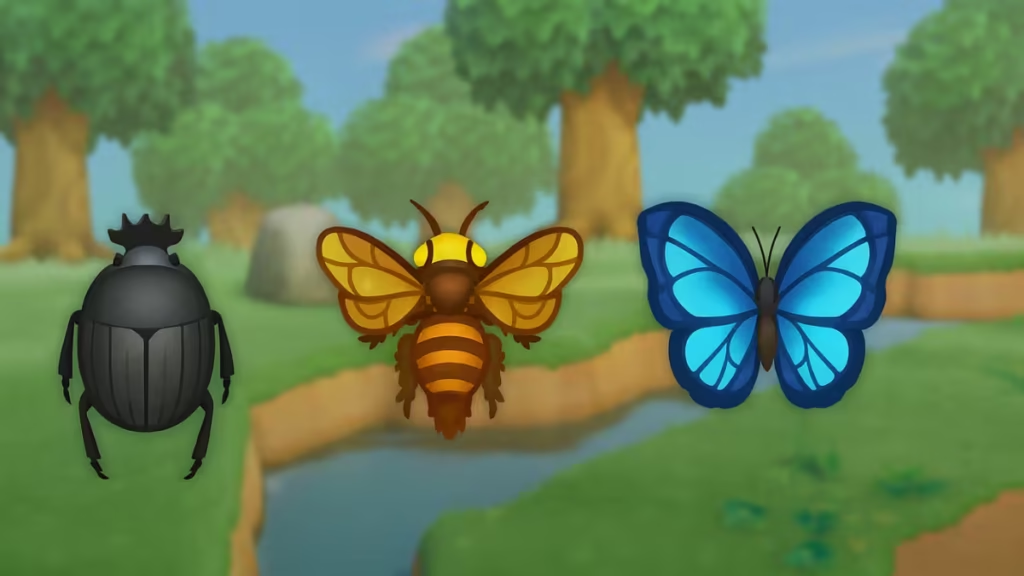
January Bug Spawns
Because New Horizons ties its critter cycles to real-world seasons, January behaves very differently depending on your island’s hemisphere:
- Northern Hemisphere: Winter continues, bringing a smaller, stable set of bugs. None are new this month, and none leave after January.
- Southern Hemisphere: It’s peak summer, meaning the game offers one of its largest bug pools of the year, including several rare beetles and high-value palm-tree spawns.
Northern Hemisphere — All January Bugs
| Bug Name | Location | Time | Sell Price (Bells) |
|---|---|---|---|
| Common Butterfly | Flying | 4am – 7pm | 160 |
| Yellow Butterfly | Flying | 4am – 7pm | 160 |
| Tiger Butterfly | Flying | 4am – 7pm | 240 |
| Peacock Butterfly | Flying near hybrid flowers | 4am – 7pm | 2,500 |
| Common Bluebottle | Flying | 4am – 7pm | 300 |
| Paper Kite Butterfly | Flying | 8am – 7pm | 1,000 |
| Great Purple Emperor | Flying near trees | 4am – 7pm | 3,000 |
| Emperor Butterfly | Flying | 5pm – 8am | 4,000 |
| Agrias Butterfly | Flying | 8am – 5pm | 3,000 |
| Rajah Brooke’s Birdwing | Flying | 8am – 5pm | 2,500 |
| Queen Alexandra’s Birdwing | Flying | 8am – 4pm | 4,000 |
| Madagascan Sunset Moth | Flying | 8am – 4am | 2,500 |
| Damselfly | Flying near water | All day | 500 |
| Dung Beetle | Pushing snowballs | All day | 3,000 |
| Spider | Shaking trees | 7pm – 8am | 600 |
| Wasp | Shaking non-fruit hardwood or cedar trees | All day | 2,500 |
| Ant | Spoiled turnips or candy | All day | 80 |
| Fly | Trash, spoiled turnips | All day | 60 |
| Mole Cricket | Underground (listen & dig) | All day | 500 |
| Hermit Crab | Beach | 7pm – 8am | 1,000 |
| Man-Faced Stinkbug | On flowers | All day | 1,000 |
Southern Hemisphere — All January Bugs
January is one of the most important months for Southern Hemisphere players. A massive 61 bugs can be caught, including 21 new arrivals and even one bug that leaves after the month ends.
If you’re hunting rare beetles or completing your Museum, January is a prime collection month.
Bugs Available in January (Southern Hemisphere)
Here is the complete set of bugs spawning this month:
| Name | Price | Location | Time |
|---|---|---|---|
| Tiger Butterfly | 240 | Flying | 4am–7pm |
| Common Bluebottle | 300 | Flying | 4am–7pm |
| Paper Kite Butterfly | 1,000 | Flying | 8am–7pm |
| Great Purple Emperor | 3,000 | Flying | 5pm–8am |
| Emperor Butterfly | 4,000 | Flying | 5pm–8am |
| Agrias Butterfly | 3,000 | Flying | 8am–5pm |
| Rajah Brooke’s Birdwing | 2,500 | Flying | 8am–5pm |
| Queen Alexandra’s Birdwing | 4,000 | Flying | 8am–4pm |
| Moth | 130 | Near light | 7pm–4am |
| Atlas Moth | 3,000 | On trees | 7pm–4am |
| Madagascan Sunset Moth | 2,500 | Flying | 8am–4pm |
| Long Locust | 200 | Ground | 8am–7pm |
| Grasshopper | 160 | Ground | 8am–5pm |
| Mantis | 430 | Flowers | 8am–5pm |
| Orchid Mantis | 2,400 | White flowers | 8am–5pm |
| Honeybee | 200 | Flying | 8am–5pm |
| Wasp | 2,500 | Shaking trees | All day |
| Brown Cicada | 250 | Trees | 8am–5pm |
| Robust Cicada | 300 | Trees | 8am–5pm |
| Giant Cicada | 500 | Trees | 8am–5pm |
| Evening Cicada | 550 | Trees | 4am–8am & 4pm–7pm |
| Cicada Shell | 10 | Trees | All day |
| Darner Dragonfly | 230 | Flying | 8am–5pm |
| Banded Dragonfly | 4,500 | Flying | 8am–5pm |
| Pondskater | 130 | Fresh water | 8am–7pm |
| Diving Beetle | 800 | Fresh water | 8am–7pm |
| Giant Water Bug | 2,000 | Fresh water | 7pm–8am |
| Stinkbug | 120 | Flowers | All day |
| Man-Faced Stink Bug | 1,000 | Flowers | 7pm–8am |
| Tiger Beetle | 1,500 | Ground | All day |
| Jewel Beetle | 2,400 | Tree stumps | All day |
| Citrus Long-Horned Beetle | 350 | Tree stumps | All day |
| Rosalia Batesi Beetle | 3,000 | Tree stumps | All day |
| Blue Weevil Beetle | 800 | Palm trees | All day |
| Earth-Boring Dung Beetle | 300 | Ground | All day |
| Scarab Beetle | 10,000 | Trees | 11pm–8am |
| Drone Beetle | 200 | Trees | All day |
| Goliath Beetle | 8,000 | Palm trees | 5pm–8am |
| Saw Stag | 2,000 | Trees | All day |
| Miyama Stag | 1,000 | Trees | All day |
| Giant Stag | 10,000 | Trees | 11pm–8am |
| Cyclommatus Stag | 8,000 | Palm trees | 5pm–8am |
| Golden Stag | 12,000 | Palm trees | 5pm–8am |
| Giraffe Stag | 12,000 | Palm trees | 5pm–8am |
| Horned Dynastid | 1,350 | Trees | 5pm–8am |
| Horned Atlas | 8,000 | Palm trees | 5pm–8am |
| Horned Elephant | 8,000 | Palm trees | 5pm–8am |
| Horned Hercules | 12,000 | Palm trees | 5pm–8am |
| Walking Stick | 600 | Trees | 4am–8am & 5pm–7pm |
| Walking Leaf | 600 | Disguised as leaves | All day |
| Bagworm | 600 | Shaking trees | All day |
| Ant | 80 | Rotten items | All day |
| Hermit Crab | 1,000 | Shoreline disguise | 7pm–8am |
| Wharf Roach | 200 | Beach rocks | All day |
| Fly | 60 | Near trash | All day |
| Mosquito | 130 | Flying | 5pm–4am |
| Flea | 70 | Villagers | All day |
| Snail | 250 | Rocks/bushes (rain) | All day |
| Spider | 600 | Shaking trees | 7pm–8am |
| Scorpion | 8,000 | On the ground | 7pm–4am |
New Bugs in January (Southern Hemisphere)
January introduces 21 new bugs to the Southern Hemisphere. Many are valuable beetles found on palm trees, making this the perfect month to grow palm trees on your beaches.
New January bugs include:
| Name | Price | Location | Time |
|---|---|---|---|
| Grasshopper | 160 | Ground | 8am–5pm |
| Brown Cicada | 250 | Trees | 8am–5pm |
| Robust Cicada | 300 | Trees | 8am–5pm |
| Giant Cicada | 500 | Trees | 8am–5pm |
| Evening Cicada | 550 | Trees | 4am–8am & 4pm–7pm |
| Cicada Shell | 10 | Trees | All day |
| Blue Weevil Beetle | 800 | Palm trees | All day |
| Earth-Boring Dung Beetle | 300 | Ground | All day |
| Scarab Beetle | 10,000 | Trees | 11pm–8am |
| Saw Stag | 2,000 | Trees | All day |
| Miyama Stag | 1,000 | Trees | All day |
| Giant Stag | 10,000 | Trees | 11pm–8am |
| Cyclommatus Stag | 8,000 | Palm trees | 5pm–8am |
| Golden Stag | 12,000 | Palm trees | 5pm–8am |
| Giraffe Stag | 12,000 | Palm trees | 5pm–8am |
| Horned Dynastid | 1,350 | Trees | 5pm–8am |
| Horned Atlas | 8,000 | Palm trees | 5pm–8am |
| Horned Elephant | 8,000 | Palm trees | 5pm–8am |
| Horned Hercules | 12,000 | Palm trees | 5pm–8am |
| Walking Stick | 600 | Trees | 4am–8am & 5pm–7pm |
| Walking Leaf | 600 | Disguised as leaves | All day |
These beetles, especially those on palm trees, are among the most profitable bugs in the game, often selling for 8,000–12,000 Bells each.
Bugs Leaving After January (Southern Hemisphere)
Only one bug leaves after January:
- Honeybee – Flying, 8am–5pm
If you’re missing it in your Critterpedia, make sure to catch one before the month ends.
Pro Tips for January Bug Collecting
- Palm trees are essential in the Southern Hemisphere for rare beetle spawns. Plant several along the beach to maximize your chances.
- Night hours are the most profitable, with high-value stags and horned beetles appearing between 5pm and 8am.
- Northern players can focus on winter fish or deep-sea creatures, since bugs remain stable this month.
- Snowballs are your friend—rolling one around is the easiest way to spawn dung beetles in the Northern Hemisphere. Play Now!
Read More:
- All January Fish in Animal Crossing New Horizons
- How to Easily Beat the Dreglord in Elden Ring Nightreign
- Best FC 26 Players for The Controller Evolution
- Elden Ring Nightreign Scholar Build: Best Relics and Passives
- Phasmophobia Winter’s Jest 2025 Event Release Countdown
- Black Ops 7 Rally Point Event Rewards and Challenges Guide
- Ashes of Creation Release Date and Countdown
- Is Shieldon Shiny in Pokémon Go? Shiny Odds and How to Find It

