AMD is pushing deeper into machine learning–powered graphics, and Crimson Desert is now at the center of that strategy. The upcoming RPG will support Ray Regeneration, part of AMD’s new FSR Redstone rendering stack, at launch.
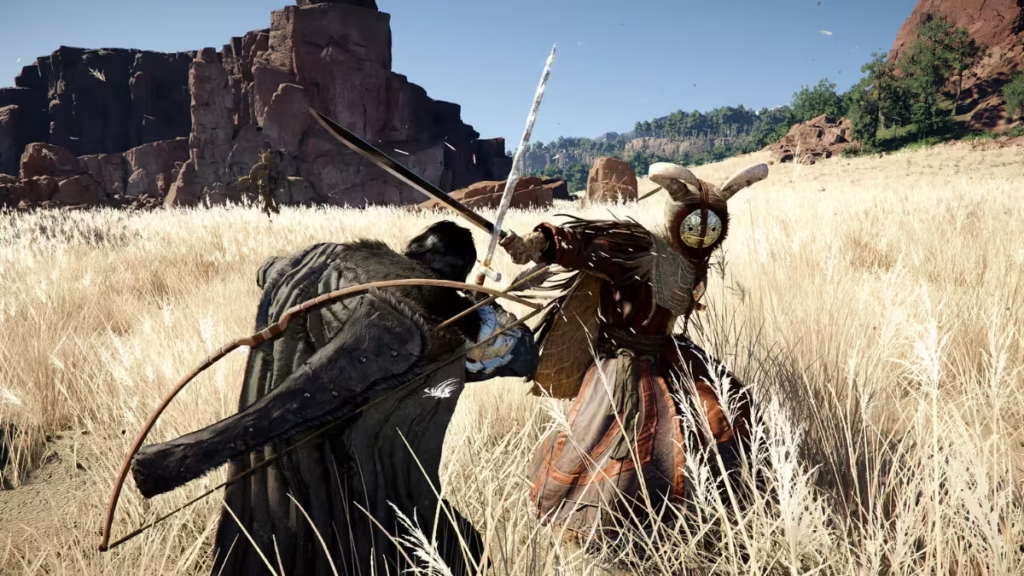
If you follow PC hardware trends, Ray Regeneration could improve ray-traced image quality without forcing you to enable upscaling or frame generation. Here’s what that actually means for gamers.
Crimson Desert
Developed by Pearl Abyss, Crimson Desert is an upcoming open-world action RPG. The game launches on March 19, and it is expected to showcase AMD’s latest rendering technologies at release.
According to reports and official AMD confirmations, the title will feature Ray Regeneration, a new ML-based denoising solution under AMD’s Redstone umbrella.
What Is AMD FSR Redstone?
AMD markets Redstone as its next-generation machine learning graphics stack. Think of it as a toolkit developers can use rather than a single feature.
Redstone includes:
- FSR Upscaling
- Frame Generation
- Ray Regeneration (ML-based denoiser)
- Radiance Caching
Unlike older rendering pipelines that tightly link these systems, AMD designed Redstone so developers can enable features independently.
That flexibility is important.
What Is Ray Regeneration?
Ray Regeneration is a machine learning–based denoiser. It improves ray-traced visuals by reconstructing cleaner lighting data from fewer ray samples.
Here’s what makes it different:
- It works independently of FSR Upscaling
- It does not require Frame Generation
- It focuses purely on improving ray-traced image quality
- It uses ML reconstruction instead of traditional denoising
AMD describes it as a standalone feature that works best inside the broader Redstone stack, but it does not force users to enable other FSR components .
This gives players more control over visual settings.
Is Crimson Desert One of the First Redstone Games?
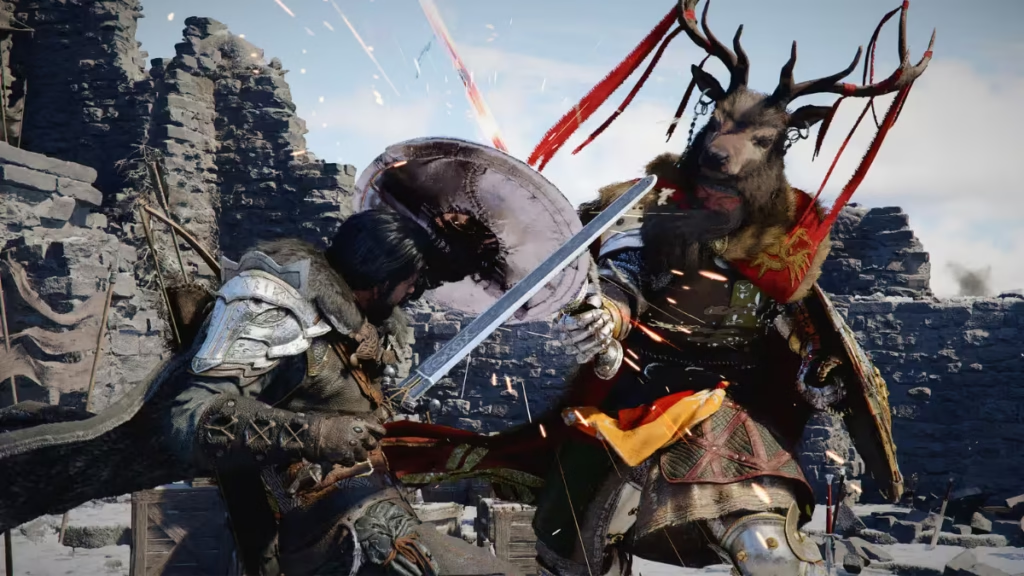
Yes. Ray Regeneration currently appears in only one other title:
- Call of Duty: Black Ops 7
If no additional titles adopt Redstone before March 19, Crimson Desert will become the second game to support Ray Regeneration.
Pearl Abyss marketing lead Will Powers confirmed the collaboration with AMD during CES, stating that the game was showcased in AMD’s booth as one of the first Redstone partner titles .
Native Rendering Demo at CES
At CES, AMD and Pearl Abyss showcased a build rendered natively rather than relying on upscaling. This choice reflects confidence in the game’s base rendering quality, highlights Ray Regeneration as a core visual enhancement, and reinforces that Redstone is more than a marketing label. By focusing on native rendering, the demo positioned Ray Regeneration as an image-quality upgrade rather than a performance crutch.
Crimson Desert in AMD Hardware Bundles
AMD has added Crimson Desert to its official hardware bundle campaign .Eligible products include:
- Ryzen 9000 desktop processors
- Radeon RX 9070 series GPUs
- Select AMD-powered gaming laptops
This move signals a deeper partnership beyond feature support. AMD wants Crimson Desert to act as a showcase title for its current PC gaming stack.
Why AMD Ray Regeneration Is Important for PC Gamers
Ray tracing looks great, but it often introduces noise and performance costs. Traditional denoisers can blur detail or reduce clarity. Ray Regeneration aims to:
- Preserve sharp lighting detail
- Improve reflection and global illumination stability
- Reduce artifacts in ray-traced scenes
- Maintain cleaner visuals without forced upscaling
If AMD delivers on these promises, Redstone could become a serious competitor in the ML rendering space.
What Crimson Desert Offers at Launch
When Crimson Desert launches on March 19, expect:
- Ray Regeneration support at release
- Optimized performance on Ryzen + Radeon systems
- A visual showcase title for Redstone features
- Benchmark comparisons across GPUs
If performance and image clarity align, this could become one of AMD’s most important showcase games of the year.
March 19 will reveal whether Ray Regeneration lives up to the hype. Preorder Now!

