Most Houston parents wait until a child complains of tooth pain before they call a dentist. That timing costs families more money, more stress, and more discomfort than it needs to. A pediatric dentist can spot trouble long before your child feels anything, and the first visit takes less time than most pediatrician appointments.
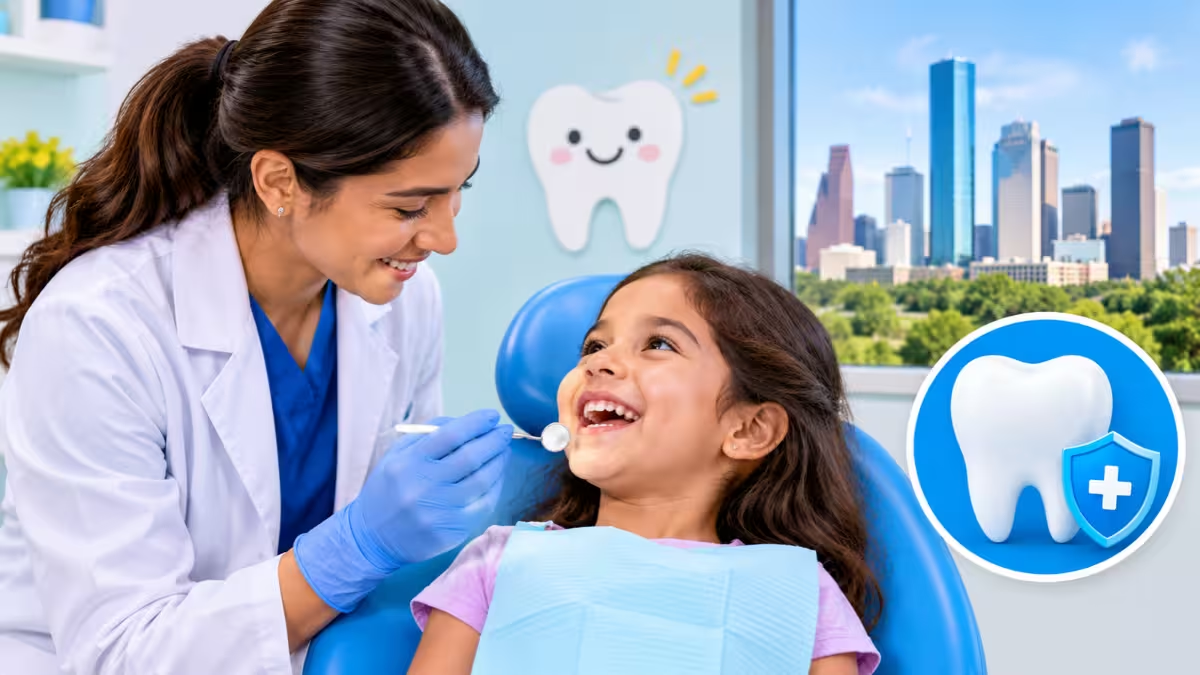
This guide explains exactly when to book, what the dentist does, how to prepare your child, and what to ask before you pick an office in Houston.
Best Age to Book a Child's First Dentist Visit in Houston
Book the first visit when the first tooth breaks through the gum, and no later than your child's first birthday. The American Academy of Pediatric Dentistry sets this guideline, and nearly every pediatric dental office in Houston follows it.
Most babies get their first tooth between 6 and 12 months. If your baby reaches 12 months with no teeth yet, book anyway. The dentist will check the gums and jaw and confirm that development is on track.
Signs Your Child Needs a Dentist Before Age One
Some situations call for an earlier or urgent visit, whatever your child's age:
- White, brown, or dark spots on a tooth
- Swollen or bleeding gums
- A knocked or chipped tooth after a fall
- Your child refuses to eat, or cries when chewing
- A bad taste or smell in the mouth that does not go away
Why Baby Teeth Need a Dentist Before Cavities Show Up
A baby's mouth looks tiny and simple, but cavities can start as soon as teeth appear. Almost half of children develop decay before they reach kindergarten. Decay in baby teeth can cause pain, trouble eating, and missed school days, and it can push permanent teeth out of position.
An early visit gives you three things:
- A risk check: The dentist looks at your child's teeth, gums, bite, and jaw growth, and flags early decay or habits that need attention.
- Practical coaching: You learn how much fluoride toothpaste to use, how to brush a wriggling toddler, and how to handle bottles, sippy cups, and snacks.
- A dental home: Your child meets one familiar team. Children who see the same friendly faces from a young age usually fear the dentist less later.
Pediatric Dentist vs General Dentist for Young Children
A pediatric dentist completes extra training after dental school that focuses on babies, children, and teens. The team knows how to examine a squirming one-year-old, how to explain a cleaning to a four-year-old in simple words, and how to treat a nervous eight-year-old with patience.
The office design matters too. Smaller chairs, bright rooms, and staff who speak kid language make a real difference. Some general dentists in Houston also treat children well, so ask about their experience with your child's age group before you book.
Does Medicaid or CHIP Cover a Child's Dental Visit in Texas?
Cost worries stop many families from booking early, but help exists. Texas Medicaid and the Children's Health Insurance Program (CHIP) cover dental services for eligible children, including checkups, cleanings, and many fillings and crowns. Several Houston pediatric offices accept both programs.
Before you book, call the office and ask these questions:
- Do you accept my child's exact plan, not just Medicaid or CHIP in general?
- Do you take managed care or HMO-style dental plans? Some offices do not.
- What does the plan cover for exams, fluoride, X-rays, and sealants?
- Will you check my child's benefits before the visit?
- What will I pay out of pocket, if anything?
If you use private insurance, ask about network status, deductibles, and how often the plan covers cleanings. Policies differ a lot, so confirm details directly with your insurer as well.
What to Check Before Choosing a Pediatric Dentist in Houston
Houston is huge, and traffic shapes daily life. Pick an office you can reach without a stressful drive, because short trips make regular visits easier to keep. Then compare these points:
- Credentials: Look for a board-certified pediatric dentist or a dentist with proven pediatric training.
- Comfort options: Ask how the office handles anxious children. Many offer calming techniques, and some offer nitrous oxide (laughing gas) for fillings or longer treatment.
- Treatment range: Check whether the office handles fillings, crowns, extractions, and emergencies, so your child does not need a new dentist if problems appear.
- Scheduling: Look for early, late, or Saturday appointments that fit your work week.
- Communication: A good team explains each step to your child and to you, and answers questions without rushing.
- Reviews: Read recent parent reviews and look for comments about patience, cleanliness, and how the staff treats scared children.
What Your Child Will Do and See at the First Appointment
Expect a calm, short appointment. Most first visits run 30 to 45 minutes, and visits for babies often finish sooner. The team adjusts the plan to your child's age and mood.
Health history: The staff asks about feeding, sleep, medications, allergies, and any family history of cavities.
A gentle exam: The dentist checks the teeth, gums, tongue, bite, and jaw. With babies and toddlers, many dentists use a knee-to-knee position. You sit facing the dentist, your child lies back with their head in the dentist's lap and their legs around your waist. Your child sees your face the whole time.
Cleaning and fluoride: Older toddlers and children often get a light cleaning and a fluoride treatment. Fluoride strengthens enamel and lowers cavity risk.
X-rays only when needed: A baby does not need X-rays at every visit. The dentist orders them when an exam cannot answer a question, such as suspected hidden decay or an injury.
A talk with you: This part often matters most. The dentist reviews brushing, diet, pacifiers, thumb sucking, teething, and night feeding, then tells you when to return.
How to Get Your Child Ready at Home, Step by Step
You do not need a big production. Keep it simple and positive.
- Use plain, upbeat words: Tell your child the dentist will count their teeth and help keep them strong.
- Skip scary words: Avoid "shot," "drill," "hurt," and "pain." Never use the dentist as a threat.
- Time the news: For anxious children, mention the visit on the same day. For curious children, a few days ahead works well.
- Play pretend: Let your child be the dentist for a stuffed animal, then swap roles and count their teeth with a clean toothbrush.
- Read a picture book about a first dental visit.
- Pick a good time: Book when your child normally feels rested and fed. Avoid nap time.
- Bring a comfort item, such as a small toy or blanket.
- Stay relaxed: Children read your face and tone. A calm parent sets a calm mood.
If your child cries or refuses the chair, do not panic. That reaction happens often at early visits. A good pediatric team slows down, finishes what it safely can, and lets your child warm up over time.
First Visit Checklist: Papers and Items to Pack
Pack these items for the appointment:
- Your child's insurance card and member ID
- A photo ID for the parent or guardian
- A list of medications and known allergies
- Any dental or medical records, plus the pediatrician's contact details
- Completed new patient forms, if the office sends them ahead
Tell the staff about anxiety, sensory sensitivities, special healthcare needs, or past bad experiences. That information helps them plan the visit around your child.
How Often Children Should Return After the First Visit
Most children benefit from a checkup every six months. Some need visits more often, especially those with a history of cavities, a high-sugar diet, or other risk factors. Your dentist sets the schedule based on your child's own needs, so follow that advice rather than a general rule.
Daily Brushing Habits for Babies and Toddlers
The dental visit works best when home care backs it up.
- Wipe your baby's gums with a soft, clean cloth before teeth appear.
- Brush twice a day once teeth come in, using a rice-sized smear of fluoride toothpaste for children under three.
- Move to a pea-sized amount from age three.
- Stop bottles in bed, and shift to a cup around the first birthday.
- Limit juice, sweet drinks, and sticky snacks. Offer water between meals.
- Help your child brush until they can tie their own shoes.
Frequently Asked Questions
What age should my child first see a pediatric dentist in Houston?
Book the first visit when the first tooth appears, and no later than the first birthday.
Does the first dental visit hurt?
No. The first visit focuses on a gentle look at the mouth, a short cleaning when appropriate, and advice for parents. Most children feel curious or mildly unsure, not pain.
How long does a first dental visit take?
Most visits last 30 to 45 minutes. Babies and very young toddlers may finish sooner, and children with anxiety or complex health needs may need more time.
Will my baby need X-rays at the first visit?
Usually not. Dentists take X-rays only when the exam cannot answer a specific concern, such as hidden decay, trauma, or an infection.
Can I stay with my child during the appointment?
Yes. Parents normally stay with babies and toddlers, and many offices let you stay with older children too.
What if my child cries or will not open their mouth?
Crying and hesitation are common. A skilled pediatric team slows down, uses simple explanations, and completes only what it can do safely. Sometimes a short first visit simply helps your child get used to the office.
Does Medicaid or CHIP cover children's dental care in Texas?
Texas Medicaid and CHIP cover dental services for eligible children, including checkups, cleanings, and many treatments. Confirm that your chosen office accepts your child's specific plan before you book.
How often should my child see the dentist after the first visit?
Most children return about every six months, but the dentist may suggest a different schedule based on cavity risk and development.
What should I do if my child has tooth pain before the first visit?
Call a pediatric dentist right away and describe the symptoms. Pain, swelling, fever, or an injury needs prompt evaluation. Do not wait for a routine appointment.