If you’re playing RACCOIN: Coin Pusher Roguelike, your skill alone won’t carry you through every run. The real challenge comes from the difficulty system.
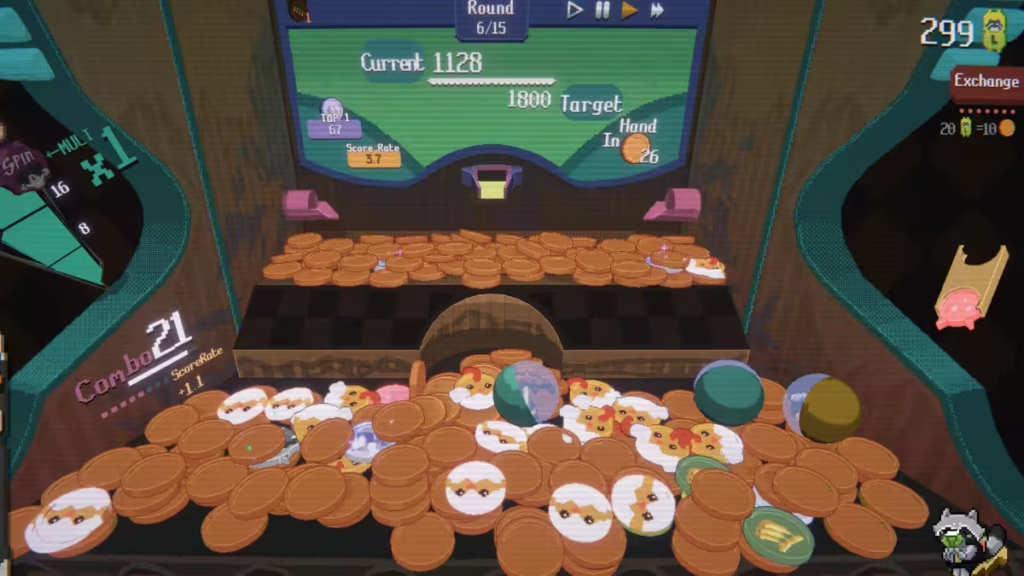
Each run uses ticket-based difficulty levels, and every new level adds extra penalties. If you don’t understand how these stack, your runs will fail quickly—even with a strong build.
How Difficulty Works in Raccoin
Before you jump into the list, here’s the key rule: Every new difficulty includes all previous effects.
That means:
- Higher difficulty = stacked penalties
- Mistakes become more punishing
- Resource management becomes critical
For example: If you select Blue Ticket, you also get the effects of Crispy Ticket.
All Difficulty Levels in Raccoin
Here’s a quick look at all difficulty levels and what they change:
| Difficulty | What It Does |
|---|---|
| Green Ticket | Default difficulty. No penalties. |
| Crispy Ticket | 10% chance coins turn into useless Cooinkies. |
| Blue Ticket | Shop prices increase by 20% per reroll (resets each round). |
| Orange Ticket | One less Clip Expansion slot (max reduced). |
| Wizard Ticket | Bad coins become worse (BadBad or Demonic variants). |
| Evil Ticket | Shop introduces Rust Coins (cannot be modified). |
| Moo Ticket | Each round starts with an unremovable barrier (Sturdy Fence). |
| Golden Ticket | Shop offers fewer coins per roll. |
How to Unlock All Difficulty Levels
You don’t get everything at once. To unlock higher difficulty:
- Win a run on the previous ticket
- Progress step-by-step
- No shortcuts
Raccoin’s difficulty system rewards smart planning, not luck. If you understand how each ticket works, you avoid wasting resources, build stronger runs, and progress faster. Start on lower tickets, learn how penalties stack, and adjust your strategy step by step. Once you master the system, even high-difficulty runs become controlled and predictable. Play Now!

