The Spring Clean update in Rust introduces a new way to generate electricity: the Water Wheel. This deployable gives you a reliable power source if you build near rivers, lakes, or the ocean.
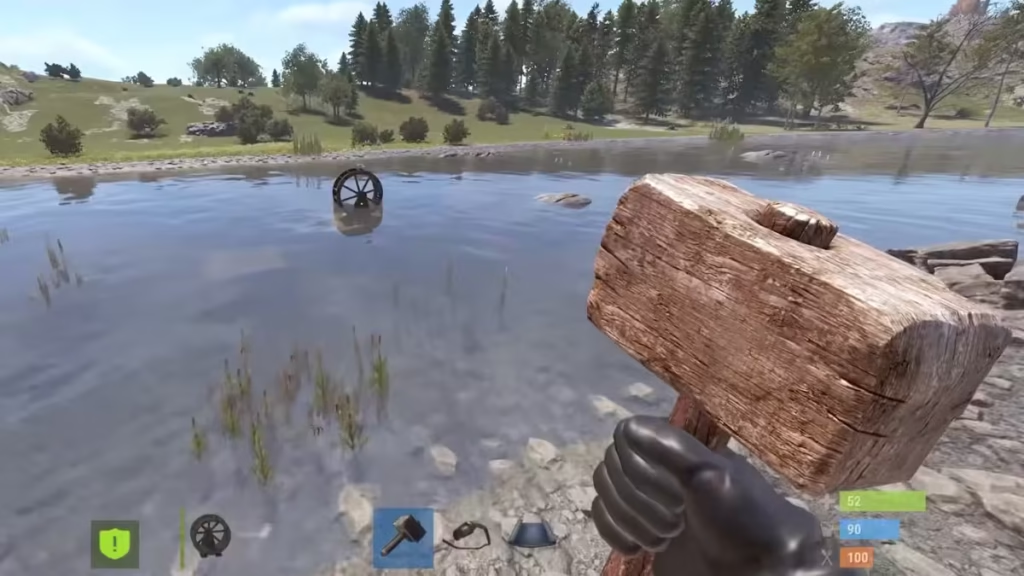
If you want stable power without relying only on solar panels or windmills, this is one of the best early-game solutions. This guide explains exactly how to unlock, craft, place, and use the Water Wheel efficiently.
What Is the Water Wheel in Rust?
The Water Wheel is a tier-1 deployable that generates electricity when placed in moving water.
It works automatically once installed correctly, making it one of the easiest passive power sources in the game.
How to Get the Water Wheel Blueprint
Before crafting, you must unlock the blueprint.
You can get it through:
- Random loot drops
- Junk piles
- Low-tier crates
- Military crates
- Elite crates
You can also unlock it using the Tech Tree with Scrap if you prefer a guaranteed method.
Crafting Requirements
Once unlocked, craft it at a Workbench Level 1.
Required Materials
- 500 Wood
- 2 Gears
- 1 Sheet Metal
This makes it a low-cost and beginner-friendly power option.
How to Place the Water Wheel
Placement decides whether it works or not.
Follow these steps carefully:
- Build near a water source (river, lake, ocean)
- Place a foundation close to the water
- Position the Water Wheel so it is partially submerged
- Ensure water flows through it
If placed correctly, the wheel starts spinning immediately and generates power.
If it does not move, adjust the position slightly until it activates.
How to Use the Water Wheel in Rust
Once your Water Wheel is running, you need to connect it properly to power your base.
Step 1: Combine Power Output
If you use multiple wheels:
- Connect them using Root Combiners
- Merge power into a single output
Step 2: Store the Power
- Place a Battery (Small, Medium, or Large)
- Connect the Root Combiner to the battery
This ensures your base still has power even if the wheel stops or gets destroyed.
Step 3: Distribute Electricity
Now distribute power using:
- Electrical Branches
- Splitters
You can now power:
- Lights
- Auto Turrets
- Industrial systems
- Doors and traps
Why Water Wheel Is Useful
The Water Wheel adds a strong alternative to existing power systems.
Key Advantages
- Works continuously (no sunlight required)
- Low crafting cost
- Ideal for river or coastal bases
- Easy to scale with multiple units
Compared to solar panels, it provides more consistent energy.
The Water Wheel is one of the most practical additions in Rust’s power system. It offers steady electricity, low setup cost, and simple mechanics that work well for both beginners and advanced players. If your base is near water, this is one upgrade you should not ignore. Play Now!

