A retrocomputing experiment has pushed old hardware far beyond its limits. A modder successfully ran Windows 98 on a Compaq iPAQ IA-2 internet appliance—a device never designed to support it.
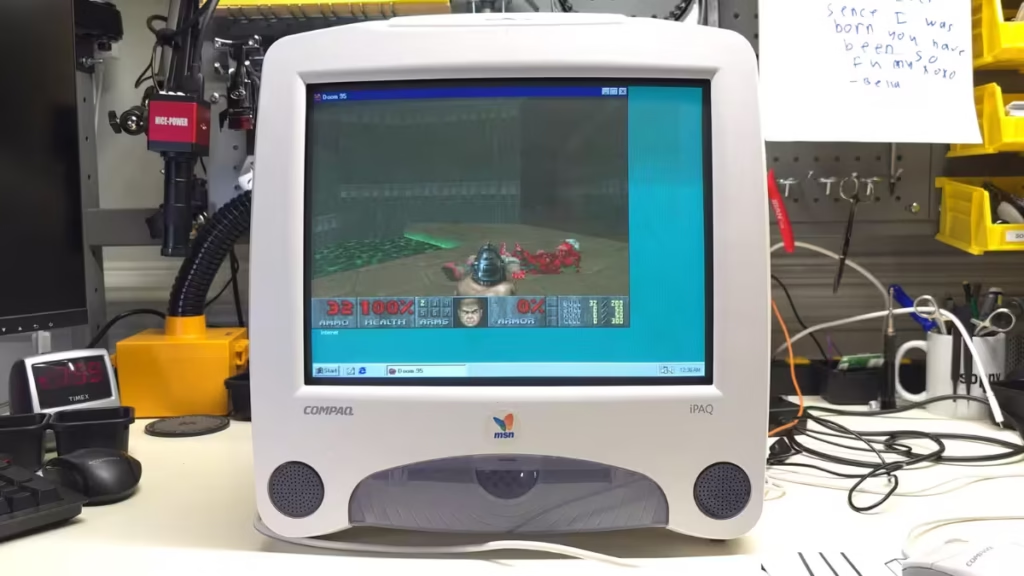
This project proves one thing clearly: with the right low-level hacks, even highly restricted legacy devices can run full desktop operating systems.
A Device That Was Never Meant for Windows 98
The Compaq iPAQ IA-2 launched around 2000 as a simple internet appliance. It shipped with Windows CE and relied on MSN dial-up services. The system focused on basic browsing and email—not full OS flexibility.
It came with strict firmware controls, limited boot options, and locked-down hardware behavior. Standard Windows 98 installation methods simply do not work on this device.
That did not stop the experiment.
How Windows 98 Was Installed on the iPAQ IA-2
Dave Luna, from the “Dad’s Computer Lab” YouTube channel, bypassed multiple hardware and BIOS restrictions to make this setup possible.
He avoided traditional installation methods entirely and built a custom boot process:
- Wrote MS-DOS directly into the device’s 16MB flash storage
- Used a chain-boot method to launch Windows 98
- Modified storage detection to trick the system
- Forced the BIOS to treat an IDE drive as an ATAPI device
These changes bypassed the IA-2’s biggest limitation—its inability to boot from external or standard storage devices.
Instead of fighting the hardware, he reprogrammed how it behaves.
Performance Is Limited—But It Works
The hardware is extremely modest:
- 266 MHz Geode GX1 processor
- Up to 256MB SDRAM
- Limited display output (800×600)
Even by late 1990s standards, this setup struggles. You cannot run modern software or multitask efficiently.
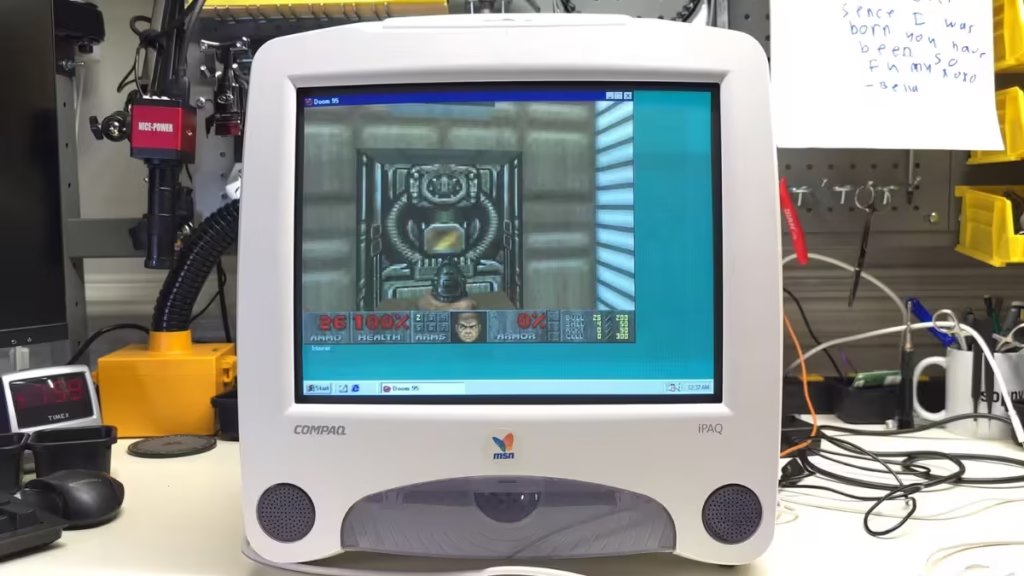
But Windows 98 boots. It runs. And it even handles lightweight applications. Most notably, it can run classic software like DOOM, which confirms that the system is fully functional at a basic level.
This setup is not practical, and no one should treat it as a daily-use system. The hardware is limited, and the process is far too complex for real-world use. But that is not the point of this experiment. The real value lies in what it demonstrates. When you understand systems at a low level, you can change how hardware behaves.
This project shows clear control over boot chains, BIOS restrictions, storage interfaces, and operating system loading. Instead of accepting limitations, the modder reshaped how the device interacts with its own components.
It also proves a broader idea that often gets overlooked. Many older devices fail not because their hardware is weak, but because software locks them down. Once you remove those restrictions, the same hardware can still perform useful tasks. This is exactly why a device designed only for basic internet access can suddenly run a full desktop operating system.
Devices like the Compaq iPAQ IA-2 originally failed because they forced users into closed ecosystems. They restricted upgrades, limited software access, and depended heavily on dial-up services tied to specific providers. That lack of flexibility made them obsolete quickly, and the model did not survive. Interestingly, modern devices like Chromebooks follow a similar idea but succeed because they offer better flexibility, cloud integration, and long-term support.
This experiment connects both eras. It shows how far technology has evolved while also proving that older hardware still has untapped potential. When you remove artificial limits, even outdated devices can do far more than they were ever designed to handle.

