Pokémon Pokopia gives players an incredible level of freedom when building villages and resource systems. Thanks to the game’s physics mechanics and Pokémon skill interactions, you can design systems that automatically generate, collect, and process resources with almost no manual work.

Many players have already started experimenting with automation builds, including complex farms that use water flow, Pokémon abilities, and processing stations to gather materials continuously. These setups allow you to focus on exploration and building while your base produces resources in the background.
How Automated Resource Farms Work
Automation systems rely on a chain of tasks performed by different Pokémon roles.
The general workflow usually follows this pattern:
| System Step | Function | Example Pokémon |
|---|---|---|
| Resource Generation | Produces raw materials | Glimmet, Glimmora |
| Item Collection | Picks up dropped resources | Pokémon with Gather skill |
| Storage | Central resource hub | Community Box |
| Processing | Converts raw materials | Processing skill Pokémon |
| Crafting | Turns materials into usable items | Furnace or workstation |
When each element connects properly, resources move through the entire system automatically.
Step 1: Build a Resource Production Habitat
The first step in building an automated farm is attracting Pokémon that generate resources naturally.
For example, Glimmet and Glimmora produce iron ore as part of their behavior. These Pokémon must live in a habitat that matches their preferred environment.
A typical Glimmet habitat requires:
- Stalagmites or rock formations
- Moss or cave-like terrain
- A wooden crate
- A powered lantern
These objects simulate a cave ecosystem, encouraging Glimmet to spawn and remain in the area.
Once the Pokémon settles in the habitat, it begins producing iron ore over time.
Step 2: Use Gather Pokémon to Collect Materials
Raw resources that appear on the ground must be collected automatically. This is where the Gather skill becomes essential.
A Pokémon with Gather ability will:
- Pick up dropped items
- Carry them to nearby storage
- Deposit them in the Community Box
This removes the need for manual resource collection.
For best results:
- Place the Community Box close to the habitat
- Keep paths clear so gatherers can move freely
- Avoid obstacles that interrupt movement
This ensures the gather Pokémon can move resources quickly.
Step 3: Connect Processing Stations
After resources reach the Community Box, another Pokémon with the Processing skill takes over.
This Pokémon will:
- Retrieve raw materials from the storage box
- Deliver them to a crafting station
- Convert them into refined items
For iron farms, the most common station is the Furnace, which turns iron ore into iron ingots automatically.
The completed items then return to storage, finishing the automation cycle.
Step 4: Prevent Pokémon From Leaving the Work Area
Automation systems break easily if Pokémon wander away from their assigned areas.
You should secure the farming zone by building simple barriers.
Common containment methods include:
- Wooden fences
- Walls
- Natural terrain barriers
- Elevated platforms
You can also design ramps or stairs that guide Pokémon toward workstations and storage boxes.
These adjustments keep the entire automation chain functioning smoothly.
How the Litter Skill Creates Passive Resource Farms in Pokémon Pokopia
Another powerful mechanic in Pokopia is the Litter skill.
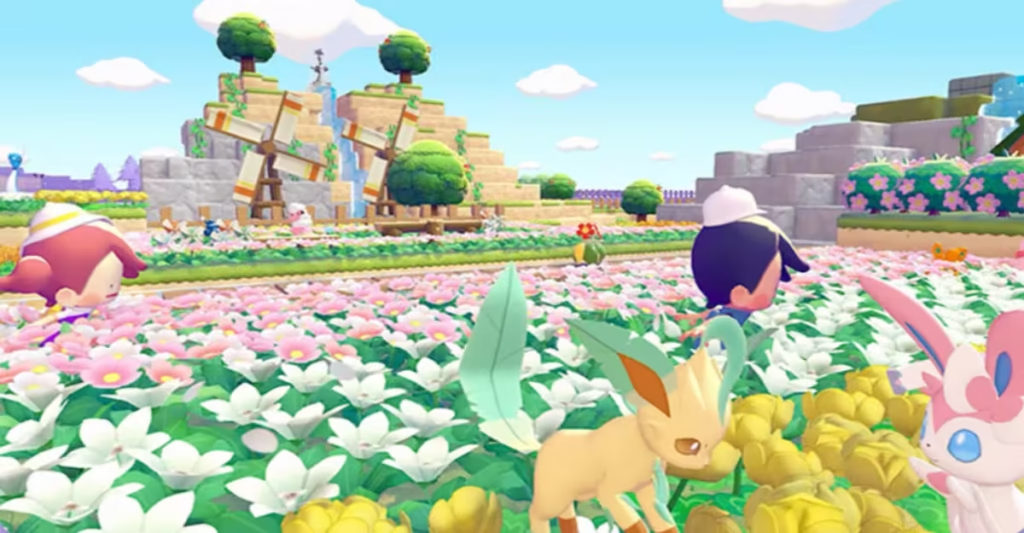
Pokémon with this ability occasionally drop useful items directly on the ground. These materials spawn automatically without player interaction.
Common litter drops include:
- Clay
- Vines
- Ore
- Crafting materials
When you combine Litter Pokémon with Gather Pokémon, the system becomes fully automatic. Items spawn naturally and get collected instantly.
This creates a passive resource farm that runs continuously.
Expand Your Automated Farm Network in Pokémon Pokopia
Once your first automated farm works, you can scale the system by adding more Pokémon and habitats.
Different Pokémon specialize in producing different resources.
Examples include:
| Pokémon | Resource Produced |
|---|---|
| Glimmet | Iron Ore |
| Bellsprout | Vines |
| Trapinch | Clay |
| Grimer | Processing tasks |
By connecting multiple habitats to the same storage network, you can produce several resources at once.
Large bases often operate like full production lines where raw materials flow through different workstations automatically.
Increase Pokémon Happiness for Higher Output
Pokémon productivity improves significantly when they feel comfortable in their habitat.
Higher comfort levels increase the frequency of tasks such as:
- Resource generation
- Gathering speed
- Processing efficiency
You can improve comfort by adding:
- Decorative objects
- Habitat-specific terrain features
- Functional structures
A well-designed habitat not only looks better but also increases automation efficiency.
As more players experiment with Pokopia’s systems, even more advanced automation designs will likely appear. For now, building a simple automated resource farm is one of the smartest upgrades you can make to your base. Play Now!

