After years of user complaints, Microsoft may finally reverse one of the most controversial design decisions in Windows 11. According to Windows Central, Microsoft is actively working on restoring the ability to move and resize the Taskbar in Windows 11. Reports indicate that the company is actively working to bring back a movable and resizable Taskbar, a feature that existed for decades before being removed in 2021.
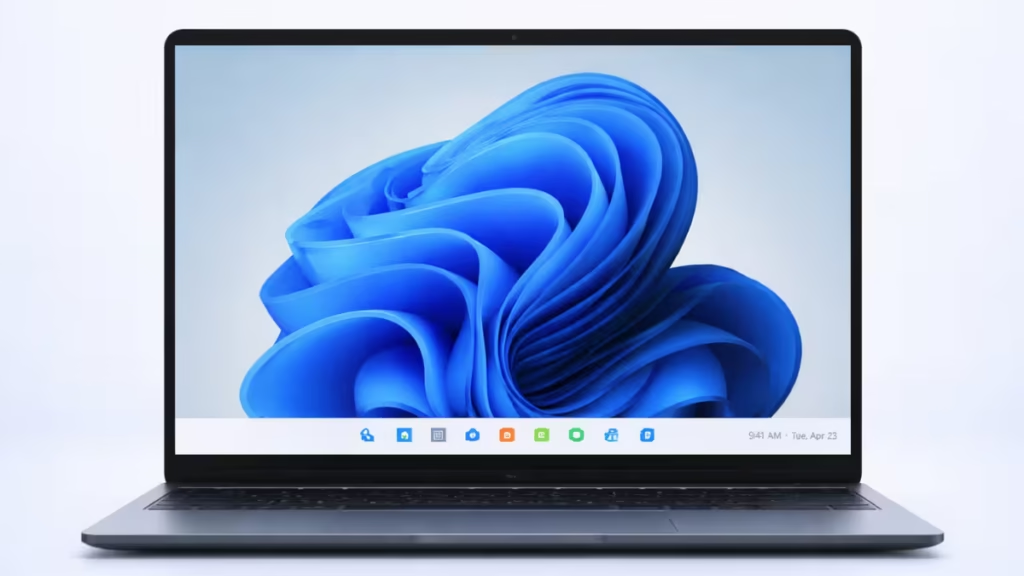
The Most Requested Windows 11 Taskbar Feature
When Windows 11 launched, Microsoft rebuilt the Taskbar from scratch. That redesign removed the ability to move the Taskbar to the top, left, or right side of the screen. Power users lost a core workflow feature overnight.
Since then, feedback has been consistent and loud. Thousands of users upvoted requests on Feedback Hub, making Taskbar positioning one of the most demanded Windows 11 fixes. Now, Microsoft appears ready to act on that feedback .
Windows 11 Taskbar Enhancements in Development
According to multiple reports, Microsoft is developing two major Taskbar improvements:
- Movable Taskbar – Users will be able to place the Taskbar on the top, left, or right edge of the screen.
- Resizable Taskbar – Users will gain control over how much screen space the Taskbar occupies.
These features were standard as far back as Windows 95, making their return more of a restoration than a new addition .
Why Microsoft Delayed Bringing Back the Movable Taskbar
Reintroducing Taskbar movement is not a simple toggle. Engineers must ensure that system tray icons, pinned apps, Start menu behavior, and flyout panels all function correctly in non-bottom orientations.
That technical complexity explains the delay. Microsoft is reportedly testing these changes carefully to avoid breaking core UI behavior .
Expected Timeline: Summer 2026
Current development plans suggest that Microsoft could unveil these Taskbar improvements as early as summer 2026, assuming timelines do not change. Internally, the work is treated as a high priority, with extra resources assigned to ship it properly .
Microsoft has not publicly confirmed the feature yet, so final availability may still shift.
The Taskbar update is not happening in isolation. Microsoft is also addressing:
- System performance complaints
- File Explorer reliability issues
- Long-standing usability feedback
Together, these changes point to a broader effort to rebuild trust in Windows 11 before Windows 10 support ends in late 2025.
For many users, Taskbar flexibility defines how comfortable Windows feels on ultrawide monitors, laptops, and productivity setups. Restoring this feature sends a clear signal that Microsoft is willing to undo unpopular decisions when feedback persists.
It may not be a flashy upgrade, but it is a meaningful one.
Would this change improve your Windows 11 experience, or did the original removal already push you away? Share your thoughts below.

