Choosing the right base location in Hytale shapes how fast you progress, how safely you explore Orbis, and how enjoyable your long-term playthrough feels. Every world seed generates differently, but smart placement always follows the same principles: fast access to resources, controlled enemy pressure, and efficient travel between Zones.
This guide breaks down the best base locations in Hytale, explains exactly why each spot works, and shows what type of player benefits most from each choice.
What Makes a Strong Base Location in Hytale
Before placing your first block, evaluate the terrain using these practical factors:
- Resource access: Trees, caves, water, and nearby ore veins reduce grinding time.
- Enemy pressure: Fewer hostile spawns mean less base defense maintenance.
- Progression efficiency: Quick access to Memory submission and crafting stations saves hours.
- Travel flexibility: Short travel distances preserve Teleporter slots for late-game routes.
- Expansion space: Flat or open terrain supports farming, storage growth, and automation.
A good location improves every system you interact with: crafting, farming, combat preparation, and exploration flow.
Forgotten Temple Gateway Base (Best Starter Location)
Best for: Early progression, new players, efficient blueprint unlocking
The Forgotten Temple Gateway sits inside Zone 1 – Emerald Grove, making it one of the safest and most efficient starting locations. Players submit Memories at the Heart of Orbis to unlock blueprints and progression systems. Building nearby eliminates long travel runs and keeps your crafting and upgrade loop fast.
- Quick access to the Forgotten Temple speeds up Memory submissions and unlocks.
- Emerald Grove spawns beginner-friendly enemies with low combat pressure.
- Flat terrain supports clean early construction and organized farming layouts.
- Nearby wildlife enables steady food production and animal farming.
- Starter resources such as wood, copper, iron, Light Hide, and Medium Hide remain easy to gather.
This location helps new players learn combat, crafting, and building fundamentals while maintaining smooth progression flow.
Cave or Carved Stone Base (Best for Defense and Resource Access)
Best for: Safety-focused players, mining efficiency, minimal building cost
A carved base inside a mountain or underground cave provides strong natural protection while keeping you close to rich ore clusters. The surrounding terrain forms your walls and ceilings, which reduces material costs and speeds up construction.
- Solid stone creates built-in defense against hostile mobs.
- Immediate access to copper, iron, thorium, and later Adamantite or Mithril improves mining efficiency.
- Expansion stays simple since you can dig outward whenever you need more space.
- Narrow entrances funnel enemies into controlled choke points that support traps and defensive setups.
- Stable underground temperatures help maintain organized storage and interior layouts.
This setup suits players who prioritize survivability, controlled defense, and consistent mining output over scenic aesthetics.
Forest Biome Base (Best for Building Creativity)
Best for: Builders, multiplayer communities, long-term expansion
Forest biomes provide abundant wood, open building space, and immersive scenery that supports long-term creative builds. Many players gradually expand forest bases into full villages or shared multiplayer hubs as their world grows.
- Continuous access to logs, sticks, and decorative materials supports nonstop construction.
- Wide open terrain allows large structures, storage zones, and farming plots to expand freely.
- Natural daylight improves visibility and highlights architectural details.
- Clear navigation paths make transportation routes and expansion planning easier.
- Multiplayer servers benefit from shared building zones and modular layouts that scale well.
Forest bases suit creative players who enjoy designing towns, farms, and visually rich builds while maintaining steady resource flow and smooth expansion.
Waterside Base (Best for Farming and Natural Defense)
Best for: Farming-focused players, PvP servers, aesthetic builders
Water locations improve farming efficiency, provide steady fish access, and create strong natural defenses. Narrow bridges, shorelines, and choke points let you control enemy movement without heavy fortifications.
- A reliable water supply supports consistent crop irrigation and farm expansion.
- Fishing traps generate food and crafting materials with minimal upkeep.
- Natural barriers restrict enemy approach paths and simplify base defense.
- Ocean proximity allows access to the Crystalline Depths for underwater resources.
- Scenic surroundings enhance base visibility and overall design appeal.
Water bases work best for survival-focused players who value long-term sustainability, efficient resource loops, and defensible layouts.
Central Zone Hub Base (Best for Late-Game Efficiency)
Best for: Fast progression players, resource optimization, teleporter management
A base positioned near the borders of multiple Zones functions as a logistics hub. This setup shortens travel time between biomes and reduces reliance on Teleporters for everyday resource runs.
- Fast access to Emerald Grove, Howling Sands, Whisperfrost Frontiers, and Devastated Lands speeds up gathering routes.
- Shorter walking distances improve efficiency when farming rare materials.
- Free Teleporter slots remain available for emergency escapes and dungeon travel.
- Central placement supports large crafting pipelines and organized stockpile management.
This setup suits players who push endgame progression and want tight control over resource flow and travel efficiency.
Mountain Base (Best for Safety and Visual Impact)
Best for: Builders, solo players, scenic base lovers
High elevations deliver sweeping views and low enemy spawn rates, making mountain bases both visually striking and naturally secure. Gliders enable fast downhill travel, turning elevated bases into efficient launch points for exploration routes.
- Minimal hostile spawns increase passive safety and reduce base maintenance.
- Elevated terrain creates excellent glider launch positions for fast traversal.
- Unique landscapes give creative builds a strong visual identity.
- Isolation limits surprise raids and wandering mob interference.
Resource scarcity remains the main trade-off, so many players pair mountain bases with Teleporters or dedicated mining outposts to maintain steady supply lines.
Zones That Support Strong Base Placement
Each Zone offers unique base potential when approached correctly:
- Zone 1 – Emerald Grove: Best for starter bases near Forgotten Temple.
- Zone 2 – Howling Sands: Oasis locations support secondary mining hubs.
- Zone 3 – Whisperfrost Frontiers: Abandoned settlements provide fortified outposts.
- Zone 4 – Devastated Lands: Elevated ruins offer late-game strongholds.
- Ocean Region: Supports underwater exploration and fishing operations.
Choosing the right Zone depends on your progression stage and risk tolerance.
Locations You Should Avoid
Some areas create unnecessary risks or inefficiencies:
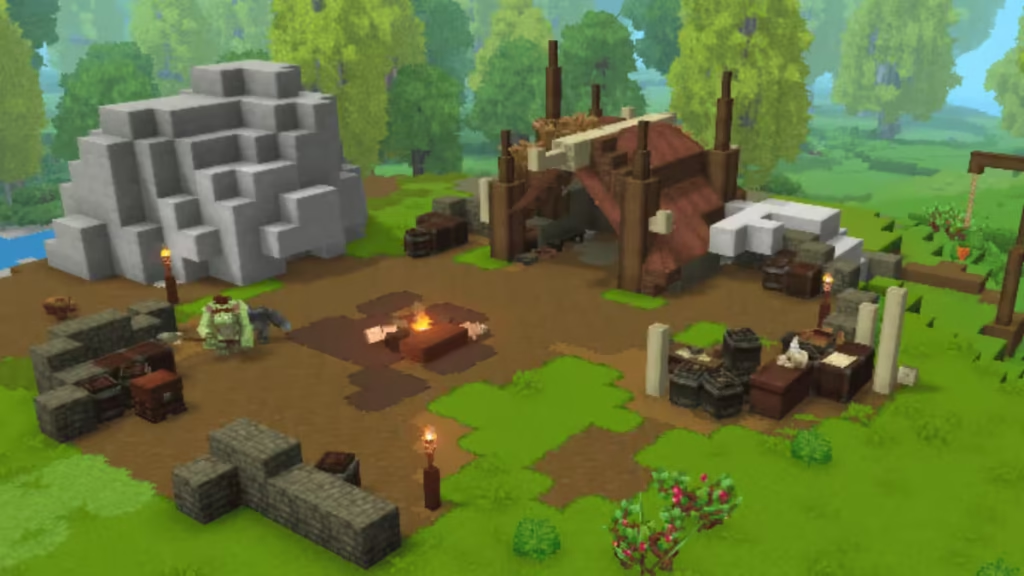
- Points of Interest (Trork Camps, hostile camps): Enemies respawn and attack continuously.
- High-density mob routes: Increased repair and defense workload.
- Tight terrain without expansion room: Limits farming and automation growth.
Avoid placing permanent bases directly inside hostile respawn zones.
The best base location in Hytale depends on how you play. If you value fast progression, build near the Forgotten Temple Gateway. If safety matters most, carve into stone or climb into the mountains. Builders thrive in forests and waterside locations, while efficiency-focused players benefit from central zone hubs.
Strong base placement reduces grind, increases survivability, and keeps your exploration flow smooth. Pick a location that supports your goals, then evolve your base as your journey through Orbis expands. Play Now!
