Mobile proxies route your traffic through IP addresses assigned by real mobile carriers, so websites treat you like an ordinary phone user. That makes them the hardest proxy type to block, and the go-to choice for web scraping, ad verification, app testing, and managing multiple social media accounts. The market has shifted a lot since 2024: prices have dropped sharply and several providers have changed their pricing models. Here are the seven best mobile proxy solutions in 2026.
Best Mobile Proxy Providers in 2026: Price and Pool Size Compared
| Provider | Starting Price | Mobile Pool / Coverage | Best For |
|---|---|---|---|
| Live Proxies | $70 for 4GB (30 days) | Private IPs, 30-minute sticky sessions | Simple plans with rollover |
| SOAX | $5/GB, or $3/GB on the $200/month plan | 33M+ mobile IPs | Large pool and precise targeting |
| DataImpulse | $2/GB pay-as-you-go | 16M+ mobile IPs | Lowest cost |
| Oxylabs | $7.50/GB ($30 for 4GB) | Real carrier IPs | Enterprise compliance and SLAs |
| ProxyEmpire | $4.50/GB (promo), dedicated from $125/month | 4M+ mobile IPs | Dedicated mobile proxies |
| Decodo | About $3.75/GB on subscription | 10M+ IPs, 700+ networks, 160+ locations | Global coverage |
| Rayobyte | $1.25/GB on the $250/month plan | Mainly US | Bulk US traffic |
What Are Mobile Proxies and Why Use Them?
Mobile proxies are vital for businesses and individuals who need secure, reliable, and anonymous internet access, especially for mobile platforms or mobile-specific content. They use IP addresses from real mobile carriers (3G, 4G, 5G, and LTE), which gives them high authenticity and makes them far less likely to be flagged than datacenter or residential proxies.
Many users share one carrier IP at the same time, so blocking a single mobile IP risks blocking real customers. This is why websites tolerate mobile traffic more than any other type.
With mobile proxies, businesses can access localized content, verify ads in different regions, manage multiple accounts without risking platform bans, and run market research with better accuracy. Here’s a look at the top providers to help you choose the best one for your requirements.
Mobile Proxy Pricing in 2026: Cost per GB Compared
Mobile proxies are still the premium end of the proxy market, but rates have fallen. Most providers now charge per gigabyte, with entry prices falling into three bands:
- Budget: about $1 to $4 per GB (DataImpulse, Rayobyte at volume, Decodo, ProxyEmpire on promotion)
- Mid-range: about $4 to $7 per GB (SOAX at low tiers, Live Proxies)
- Enterprise: about $7 to $9 per GB (Oxylabs)
Also compare traffic expiry, minimum monthly spend, and sticky-session length, not just the headline per-GB price.
Top 7 Mobile Proxy Providers Reviewed
Mobile proxies are a crucial tool for businesses that require secure IP rotation, geo-targeting, and reliable data access. Below are the best rotating mobile proxy providers, beginning with Live Proxies. Each has its own strengths, pricing model, and support setup.
1. Live Proxies: Best for Simple Plans with Rollover
Live Proxies offers rotating mobile proxies with IPs sourced from real mobile devices, well-suited for ad verification, social media automation, mobile app testing, and accessing geo-restricted content. Plans are private-IP allocations with unlimited requests, unused data rollover, and quick activation (about 10 minutes).
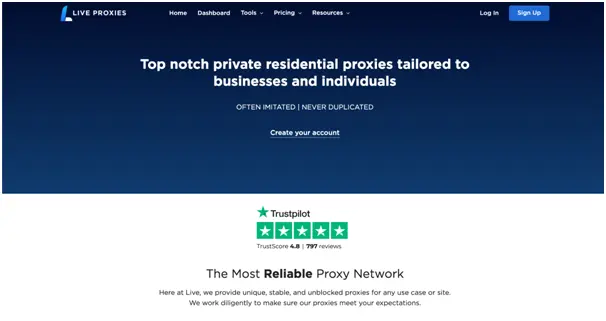
For businesses that need scale, Live Proxies also has a B2B/enterprise tier with a much lower per-GB rate, plus rotating residential proxies for scraping and SEO monitoring. Note that its static residential product is currently listed as unavailable.
- Features: Real mobile IPs, private IP allocation, 30-minute sticky sessions, unused data rollover, HTTP/S support.
- Customer Support: 24/7 support.
- Pricing:
- Individual plans: $70 for 50 IPs and 4GB (30 days); $120 for 100 IPs and 8GB (45 days).
- Enterprise: starts at $2,000 per month (about $2/GB at 1TB).
- Refunds are limited, so start with the smallest plan.
2. SOAX: Best for Large Pool and Precise Targeting
SOAX runs one of the largest mobile pools in the industry, at 33 million+ mobile IPs, and is known for precise targeting down to country, region, city, and ISP (ASN and ZIP on higher plans). Sticky sessions can be held for up to an hour, which suits SEO monitoring, ad verification, and region-specific content access.
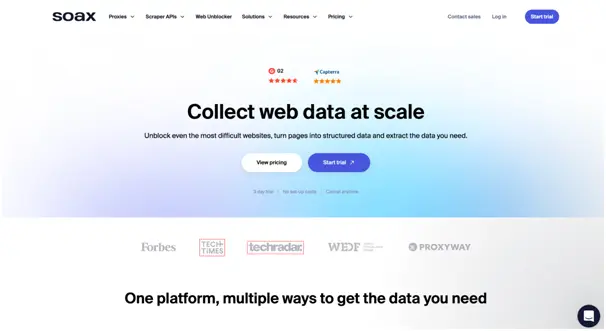
SOAX rebuilt its pricing: it now uses monthly plans with prepaid credits, and mobile traffic costs the same as residential. There is no free trial, but the free Sandbox plan lets you buy top-up credits and test at Sandbox rates.
- Features: 33M+ mobile IPs, country/region/city/ISP targeting, rotating and sticky sessions, one unified rate for mobile and residential.
- Customer Support: 24/7 support on paid plans.
- Pricing: Sandbox is free, with usage at $5/GB (US, top tier). Builder is $200/month at $3/GB, Team is $500/month at $2.20/GB, and Scale is $1,500/month at $1.50/GB. Countries in lower geo tiers cost less.
3. DataImpulse: Best Budget Mobile Proxies
DataImpulse takes the third spot. DataImpulse is the budget pick: a first-party pool of 16 million+ mobile IPs across 3G, 4G, 5G, and LTE networks, pay-as-you-go pricing, and traffic that never expires. Country targeting is free, and city, state, ZIP, and ASN targeting are available.
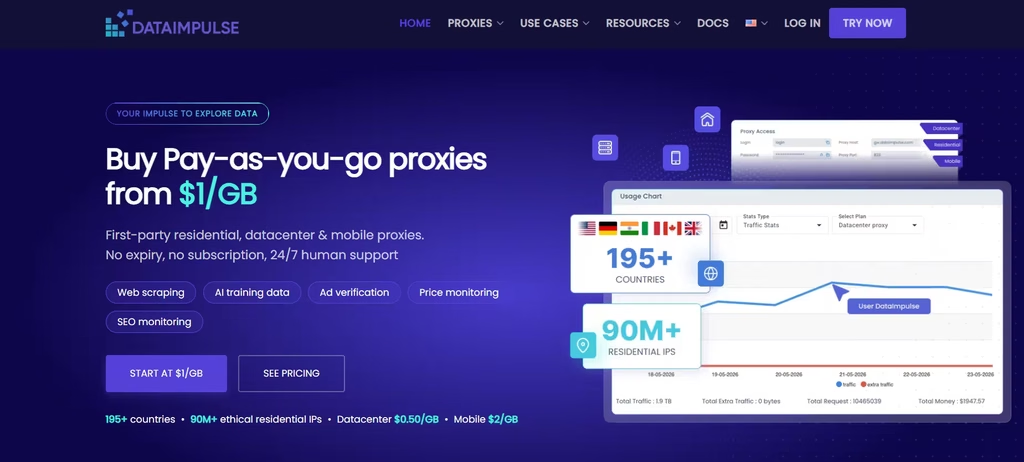
- Features: 16M+ mobile IPs, sticky sessions up to 120 minutes, HTTP(S) and SOCKS5, API access, traffic that never expires.
- Customer Support: 24/7 human support.
- Pricing: $2/GB pay-as-you-go ($5 intro pack for new users, $50 for 25GB), dropping to $1.60/GB on the 1TB plan. 7-day refund policy.
4. Oxylabs: Best for Enterprise
Oxylabs is built for enterprises needing high-scale data collection, and its mobile proxies come from real 3G, 4G, and 5G carrier connections.
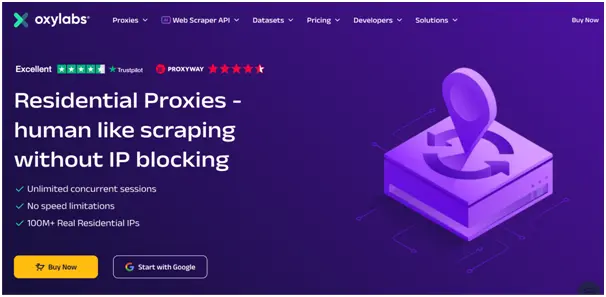
Its Web Scraper API and AI-assisted tools simplify extraction for brand protection and competitor analysis, and it stands out for compliance documentation and SLAs. The trade-off is price: it is among the most expensive options and favors larger, committed spend.
- Features: Real carrier IPs, Web Scraper API, AI-assisted scraping tools, enterprise SLAs.
- Customer Support: 24/7 support with a dedicated account manager on plans.
- Pricing: Monthly plans start at $30 for 4GB ($7.50/GB) and fall to about $6.67/GB at the 15GB plan ($100). Pay-as-you-go rates listed elsewhere run about $9/GB. Enterprise rates are custom.
5. ProxyEmpire: Best for Dedicated Mobile Proxies
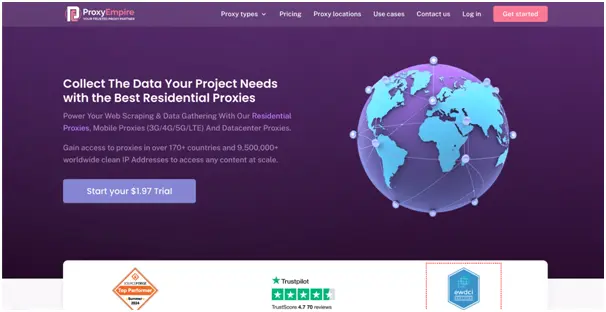
ProxyEmpire sells both rotating and dedicated mobile proxies from one account. Rotating plans are billed per GB with carrier, city, ZIP, and ASN targeting across a pool of 4 million+ mobile IPs, while dedicated plans give you private 4G/5G access with unlimited bandwidth under fair use. It is a good fit for multi-account management and localized ad verification.
- Features: Rotating and dedicated mobile proxies, carrier-level targeting, HTTP/HTTPS/SOCKS5, free Proxy Manager Android app.
- Customer Support: 24/7 support.
- Pricing:
- Rotating: $4.50/GB pay-as-you-go (currently a 50% promotion off a $9 list price), $25 for 6GB, falling to about $2/GB at 1TB.
- Dedicated: $125/month for the multi-country package; $250/month for USA 5G.
- Trial: $1.97, including 50MB of mobile data.
6. Decodo (Formerly Smartproxy): Best for Global Coverage
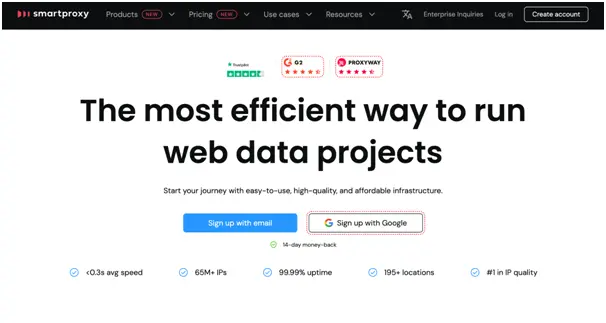
Smartproxy rebranded as Decodo in April 2025. It offers 10 million+ mobile IPs across 700+ mobile networks and 160+ locations, with targeting by country, city, ASN, ZIP, and even OS (iOS or Android). The dashboard is easy to use and includes traffic and request tracking, and it is a cost-effective choice for SEO tracking, price monitoring, and social media management.
- Features: 10M+ mobile IPs, 700+ carrier networks, ASN/ZIP/OS targeting, in-dashboard analytics.
- Customer Support: 24/7 live chat.
- Pricing: Subscription plans from about $3.75/GB, dropping to about $2.25/GB at high volume. Pay-as-you-go is about $4/GB. Mobile rates have been running a 50% promotion. 14-day money-back guarantee on eligible first purchases.
7. Rayobyte: Best for Bulk US Traffic
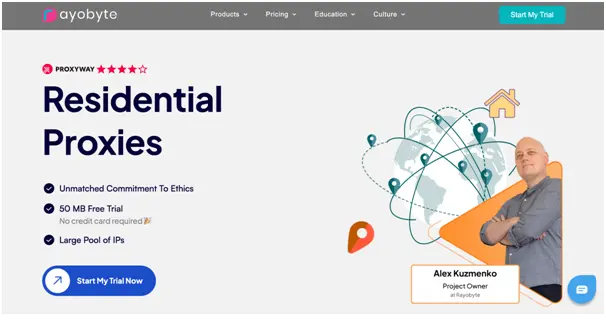
Rayobyte made the biggest pricing move of the year: in February 2026 it cut mobile proxy rates by up to 98%, from $25/GB to as low as $0.50/GB on the trial. It is now the cheapest option for bulk US mobile traffic, and it is known for its ethical sourcing and customer success focus. The catch is a $250 minimum monthly plan, traffic that expires every 30 days, and mobile coverage that is mainly limited to the US.
- Features: Rotating mobile proxies, own US carrier devices alongside a shared pool, ethical sourcing.
- Customer Support: 24/7 support.
- Pricing: $250 one-time trial for 500GB ($0.50/GB). Monthly plans: $250 for 200GB ($1.25/GB), $1,000 for 909GB ($1.10/GB), $2,500 for 2,632GB ($0.95/GB).
Which Mobile Proxy Provider Should You Choose?
Mobile proxies are still the best tool for tasks that demand carrier-grade trust, from social media automation to ad verification and app testing. The 2026 market splits into clear lanes:
- Lowest cost per GB: DataImpulse for small and flexible use, Rayobyte for bulk US traffic
- Largest pool and precise targeting: SOAX and Decodo
- Enterprise compliance and SLAs: Oxylabs
- Dedicated mobile IPs: ProxyEmpire
- Simple plans with rollover: Live Proxies
Choose based on your monthly traffic, the countries you need, and whether you need sticky sessions. Start with a small plan or trial before committing to a large package.
FAQs
What is a mobile proxy?
A mobile proxy routes your internet traffic through an IP address assigned by a mobile carrier on a 3G, 4G, 5G, or LTE network. Websites see your requests as coming from a real phone user, so they are much less likely to block or flag you than with datacenter or residential proxies.
How much do mobile proxies cost in 2026?
Most providers charge per gigabyte. Entry rates run from about $1 to $4 per GB at budget providers like DataImpulse, Rayobyte (at volume), and Decodo, and up to about $7 to $9 per GB at enterprise providers like Oxylabs. Dedicated mobile proxies with unlimited bandwidth are billed monthly, starting around $125 per month at ProxyEmpire.
Are mobile proxies legal?
Using a mobile proxy is legal in most countries. What matters is how you use it. Scraping public data, verifying ads, and testing apps are common lawful uses, but you still need to follow each website’s terms of service and local data protection laws. Choose providers that source their IPs with the device owner’s consent.
What is the difference between rotating and dedicated mobile proxies?
Rotating mobile proxies give you a fresh IP from a shared pool, either on every request or after a set sticky-session time, and you pay per GB. Dedicated mobile proxies give you a private mobile connection that only you use, usually with unlimited bandwidth and a fixed monthly price. Rotating suits scraping and multi-account work, while dedicated suits tasks that need one stable IP.
Mobile proxies or residential proxies: which should I choose?
Choose mobile proxies for the toughest targets, such as social media platforms, ad verification, and sites with strong anti-bot protection. Choose residential proxies for general scraping and price monitoring, where they cost noticeably less per GB. If a site doesn’t block residential IPs, you don’t need to pay the mobile premium.
Read More