Double Fine Productions, the creative minds behind Psychonauts 2 and Broken Age, have returned with another artistic experiment that blurs the line between interactive storytelling and visual art. Keeper is a surreal adventure that transforms a simple concept — a walking lighthouse — into one of the most evocative journeys of the year.
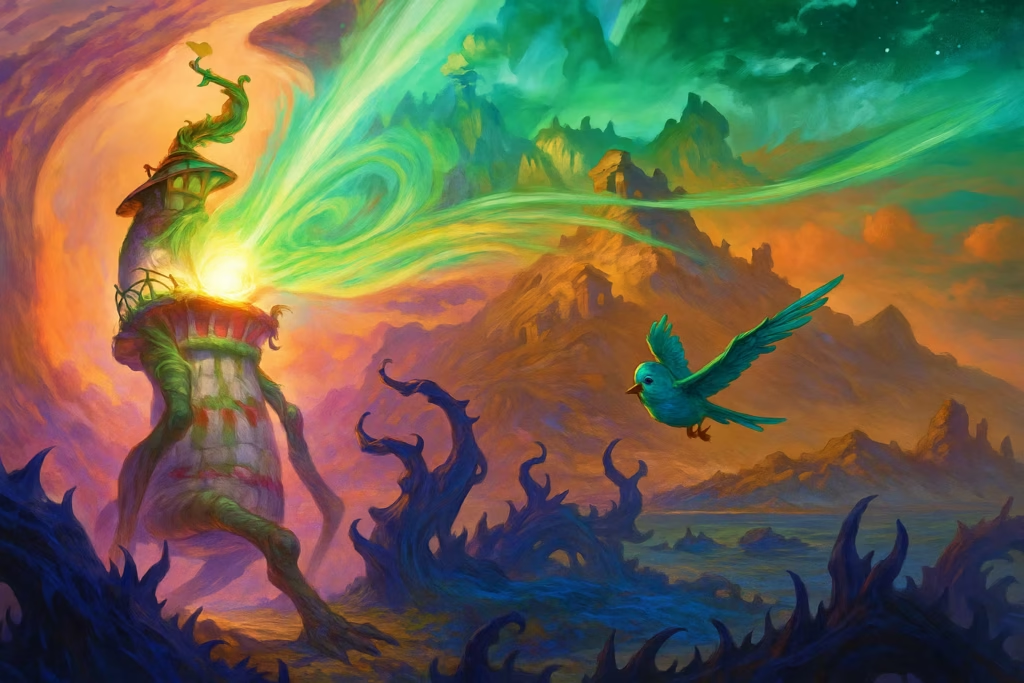
The game opens with a quiet, almost melancholic sequence. A small bird named Twig flees from a shadowy swarm called The Withering and finds refuge atop an abandoned lighthouse. Then, in a moment that perfectly captures Double Fine’s knack for whimsy, the lighthouse awakens, sprouts spider-like legs, and sets off on a journey toward the tallest peak on the horizon.

- Includes 16 launch 6v6 maps plus 20v20 large-scale arenas.
- Explore Japan, Mediterranean regions, and inner-mind locations.
- Round-Based Zombies with vast Dark Aether survival environments.
- Optimized performance and fast loading on PS5.

- Ultralight design optimized for FPS agility and flick speed.
- 8,000Hz hyper-polling for ultra-low latency responsiveness.
- Custom-tuned mechanical switches rated for 100M clicks.
- Up to 70-hour wireless gaming battery life on a single charge.
This wordless story unfolds without dialogue or exposition. Every scene, animation, and musical cue tells its own tale. Instead of being guided by text or voiceovers, you’re guided by light — quite literally. As the lighthouse, your beacon becomes the tool that interacts with the world, reviving plants, burning away corruption, and unlocking pathways. It’s simple, meditative, and mesmerizing.
Dreamlike Exploration and Subtle Puzzles
At its core, Keeper is an exploration-based puzzle game. You’ll travel through strange, pastel-colored biomes — glowing forests, clockwork cities, and floating dreamscapes — each filled with creatures that feel plucked from a surrealist painting. The environments have a tactile quality, as though sculpted from clay and brushstrokes rather than polygons.
While the puzzles themselves aren’t particularly challenging, they fit the game’s tone. You use your light to manipulate time, grow flora, or guide Twig to activate switches. Occasionally, the game introduces fresh mechanics — like reversing time or changing forms — but they’re designed to encourage curiosity, not competition. Think less Portal or The Witness, and more Journey or Gris.
Some players may find the simplicity disappointing, but Keeper’s puzzles are secondary to its emotional atmosphere. Every small interaction — every flower that blooms, every creature that stirs under your light — reinforces the theme of renewal and connection.
A Living Canvas of Color and Sound
Visually, Keeper is nothing short of breathtaking. The world feels hand-crafted, glowing with painterly textures and surreal geometry. HDR lighting makes every beam of your lighthouse feel alive, casting shadows that stretch and twist like brushstrokes across a canvas.
The soundtrack perfectly complements this visual poetry. Percussive, melodic, and often haunting, it builds a sense of wonder that stays consistent from the opening steps to the final ascent. Combined with fixed cinematic camera angles — which frame each scene like a film shot — Keeper feels curated, intentional, and deeply artistic.
Double Fine’s attention to atmosphere has always been their strength, but Keeper takes it further. It’s not just beautiful; it’s deliberate. Every visual, every note, every cut of the camera serves the story.
Emotional Payoff and Thematic Depth
Without spoiling key moments, Keeper manages to achieve something remarkable: it makes you care about a lighthouse. Through expressive animation and pacing, the bond between Twig and the Lighthouse feels real — almost tender. There’s no dialogue, but their cooperation and shared persistence tell a universal story about companionship and endurance.
The game’s final act is where it shines brightest — literally and emotionally. After hours of quiet introspection, Keeper bursts into life with kinetic transformations, surreal visuals, and one of the most memorable sequences Double Fine has ever produced. It’s not a long game, but its ending lingers.
Performance and Platform Notes
On Xbox Series X and PC, Keeper runs smoothly, though PC players should note the lack of ultrawide support at launch. Handheld performance — such as on the ROG Ally — currently struggles, hovering around 30–40 FPS depending on power settings, though Double Fine has promised optimization patches soon.
Regardless of platform, this is a game best enjoyed on a large screen with good audio. Its visual storytelling deserves that stage.
See also: Ball x Pit Review – The Ultimate Breakout Meets Vampire Survivors Roguelite
Where Keeper Stumbles
For all its artistic ambition, Keeper isn’t flawless. The puzzles, while charming, rarely challenge the player. Movement can feel clunky, and fixed camera transitions occasionally disrupt momentum. Some sections drag slightly due to pacing, and the lighthouse’s slow gait may test impatient players.
Yet these flaws don’t detract from what Keeper truly is — a meditative experience rather than a test of skill. It’s not designed to thrill; it’s designed to resonate.
Final Verdict
Keeper isn’t just a game — it’s an artistic statement. It’s a reminder that games can be reflective, poetic, and emotional without relying on combat or dialogue. In a market saturated with open worlds and loot systems, Double Fine has crafted something refreshingly human, even if its protagonist isn’t.
For players willing to embrace its slower pace and subtle storytelling, Keeper offers one of the most imaginative adventures of the year.
Score: 8.5 / 10
Pros
- Stunning, painterly visuals and inspired world design
- Emotional, wordless storytelling
- Strong art direction and atmosphere
- Memorable music and sound design
Cons
- Simple puzzles and repetitive interactions
- Slow movement and pacing issues
- Lacks replayability
Available On: Xbox Series X|S, Windows PC, Steam
Developer: Double Fine Productions
Publisher: Xbox Game Studios
Release Date: October 17, 2025

