Every major breach sends a fresh batch of emails, passwords, phone numbers and Social Security numbers into criminal marketplaces. Most people never learn their details leaked until a stranger logs into their account or opens a credit card in their name. A quick scan tells you where you stand, and a few targeted steps make that leaked data far less useful to whoever bought it.
How Your Data Ends Up on the Dark Web
Attackers collect your information through breaches, malware and tricks, then resell it in bulk.
The dark web is a hidden layer of the internet that standard browsers and search engines cannot reach. Sites there run on anonymized addresses and need special software such as Tor to open. Journalists and whistleblowers use it for legitimate reasons, but it also hosts forums, Telegram-linked channels and marketplaces where criminals sell stolen records.
Your data usually lands there through one of these routes:
- Company breaches: Hackers break into a retailer, app, payroll provider or data broker and dump its customer database.
- Infostealer malware: Malicious software on your own device quietly grabs saved passwords, cookies and card details.
- Phishing and fake login pages: You type credentials into a cloned site that forwards them to an attacker.
- Account takeovers: A criminal who breaks into one account steals everything stored there and uses it to scam your contacts.
- Reused passwords: Attackers take a password from one breach and test it against your other accounts.
What Personal Information Criminals Sell on the Dark Web
Sellers list almost any detail that helps someone commit fraud, and the prices stay low.
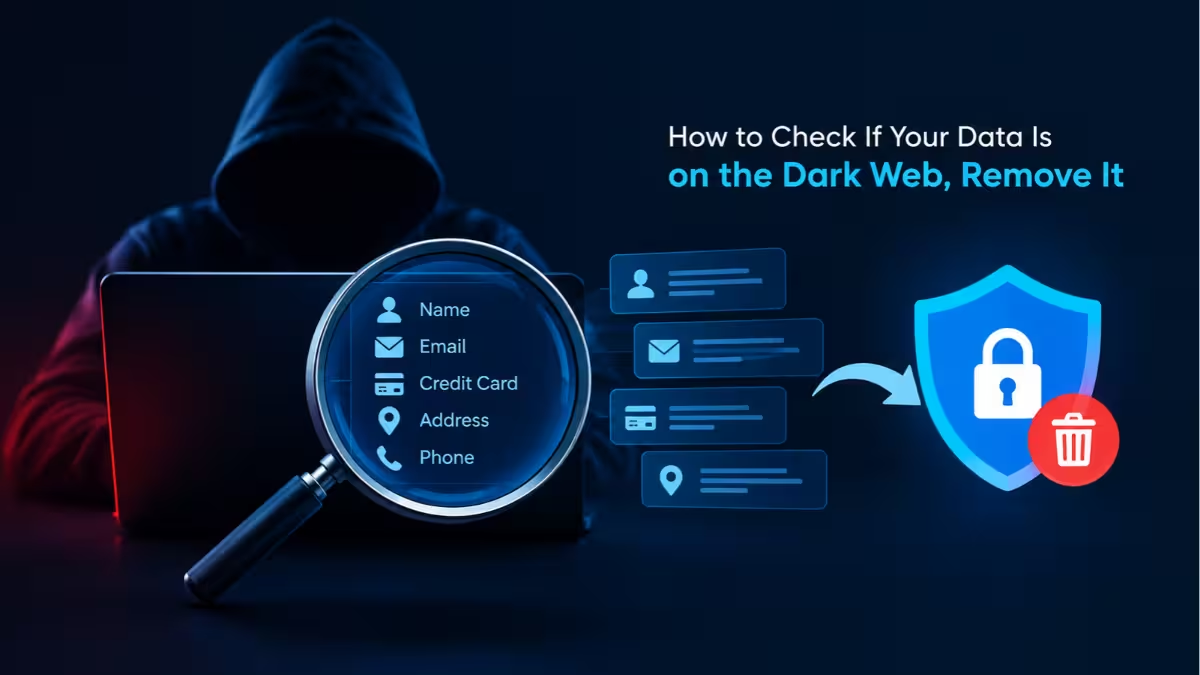
- Contact details: Email addresses, phone numbers and home addresses.
- Login credentials: Email, social media, shopping, banking and crypto account logins.
- Identity data: Full name, date of birth, SSN, driver's license and passport numbers.
- Financial data: Credit card numbers, bank account details and investment account access.
- Medical records: Insurance details and patient identifiers.
- Work data: Employee logins and company access details.
Criminals often bundle a name, address, date of birth and SSN into one package. Sellers price these bundles from a few dollars up to a few tens of dollars, which explains why identity theft stays the most common crime on these markets.
How to Check If Your Data Is on the Dark Web for Free
Several trusted services search known breach databases and dark web sources for you, so you never have to visit those sites.
| Tool | What It Checks | Cost |
|---|---|---|
| Have I Been Pwned | Email addresses, phone numbers, known compromised passwords | Free |
| Mozilla Monitor | Email addresses across known breaches, with alerts | Free tier available |
| Experian dark web scan | Email, phone number and SSN | One free scan, paid monitoring |
| Aura | Email-based breach and marketplace scan | Free scan, paid monitoring |
Run every email address you have ever used, including old school or work accounts. Many people check their main inbox, find nothing, and miss the forgotten address tied to a breached shopping site from years ago.
For password checks, Chrome's Password Checkup and iCloud Keychain on Apple devices flag saved passwords that appear in known leaks. Enable both if you use those platforms.
No scanner sees everything. Many criminal forums run as private, invite-only spaces, so a clean result lowers your risk but does not guarantee your data stayed private.
Is It Safe to Search the Dark Web Yourself
No. Manual browsing exposes you to more risk than the leak itself.
Dark web sites carry malware, fake download links and phishing traps aimed at curious visitors. Even with Tor installed, you would not know which marketplace or forum holds your data, and most require an invite or payment to search. Monitoring services already index these sources at scale, so a manual search gives you less information at a much higher cost.
What to Do If Your Data Is on the Dark Web
Your response depends on what the scan found, so match each exposed item to the steps below.
If Your Email Address Is on the Dark Web
An exposed inbox matters most because attackers use it to reset passwords everywhere else.
- Change your email account password to a long, unique one.
- Turn on multifactor authentication (MFA) for the email account.
- Open your mail settings and remove any forwarding rules or filters you did not create.
- Review recent sign-in activity and sign out of unknown devices.
- Expect more phishing and treat unexpected "account alert" messages with suspicion.
If Your Password Is on the Dark Web
Treat the password as public, even if the breach only exposed a scrambled (hashed) version.
- Change it on the breached site and on every other account where you used it or a close variation.
- Move your logins into a password manager so every account gets its own random password.
- Switch to passkeys on accounts that offer them, since they cannot be phished like a password.
- Enable MFA everywhere, starting with email, banking and cloud storage.
Prefer an authenticator app or a hardware security key over text message codes. Attackers who hijack your phone number can intercept SMS codes.
If Your Phone Number Is on the Dark Web
A leaked number opens the door to SIM swapping, where a criminal moves your number to their own SIM.
- Call your carrier or use its app to add a port-out PIN or number lock to your account.
- Set a SIM PIN in your phone settings.
- Move MFA off SMS on your important accounts.
- Watch for smishing texts that pretend to come from your bank, a delivery company or a government agency.
If Your SSN Is on the Dark Web
A leaked SSN carries the highest risk because criminals can open new credit in your name.
- Freeze your credit at all three bureaus: Equifax, Experian and TransUnion. Each freeze costs nothing, and you must place it separately at each bureau.
- Add a fraud alert if you want lenders to verify your identity before approving credit. One bureau forwards the alert to the other two.
- Request an IRS Identity Protection PIN to block fraudulent tax returns filed under your SSN.
- Create a my Social Security account before a criminal registers one in your name.
- Pull your credit reports at AnnualCreditReport.com and look for accounts you never opened.
Keep the freeze in place long term. When you apply for a loan or card, lift it temporarily and refreeze afterward.
A fraud alert comes in three forms. An initial alert lasts one year, an extended alert lasts seven years and needs an identity theft report, and an active-duty alert protects deployed service members for one year.
If Your Card or Bank Details Are on the Dark Web
Speed matters here, since your liability for unauthorized debit transactions can grow the longer you wait to report them.
- Call the card issuer or bank and ask for a new card or account number.
- Dispute any charge you do not recognize.
- Turn on transaction alerts in your banking app so every purchase triggers a notification.
- Check linked accounts too, including shopping sites and travel loyalty programs that store your card.
If Someone Already Misused Your Data
Report the theft so you have a paper trail for banks, lenders and credit bureaus.
File a report at IdentityTheft.gov, the FTC's official site. It builds a personal recovery plan and gives you an identity theft report you can send to companies. You can also file a police report and submit cybercrime details to the FBI's IC3. Then dispute any fraudulent accounts or entries directly with each credit bureau.
Can You Remove Your Information From the Dark Web
No person, company or government can erase leaked data once criminals copy and resell it.
Stolen records get mirrored across forums, channels and private archives that no single party controls. Police occasionally seize a marketplace, but the data that changed hands before the takedown keeps circulating. Treat any service that promises to "delete" you from the dark web as a red flag.
Data broker removal works differently. People-search sites on the regular web do accept opt-out requests, and removing yourself from them makes it harder for criminals to match an old leak to your current address and phone number.
How to Protect Yourself From Future Data Leaks
You cannot stop every company from getting breached, but you can shrink what a future leak gives away.
- Use email aliases: Services such as Firefox Relay, SimpleLogin or Apple's Hide My Email give each site its own address, so one leak does not expose your main inbox.
- Keep unique passwords: A password manager makes this painless and limits any breach to a single account.
- Secure key accounts with hardware keys: Physical security keys block phishing on your email and financial logins.
- Keep devices updated: Patches close the holes that infostealer malware exploits, and real-time antivirus catches many of those threats.
- Share less publicly: Birthdays, pet names and family details on social media help scammers answer security questions and craft believable messages.
- Set up ongoing monitoring: A one-time scan shows past breaches only, while continuous monitoring alerts you when new data appears.
Frequently Asked Questions
Is it illegal to visit the dark web?
In most countries, using Tor or opening dark web sites is legal. Buying stolen data, drugs or other illegal goods there is not. Visiting still carries real malware and scam risks, so most people should rely on scanning tools instead.
Does a dark web leak mean I will become an identity theft victim?
No. A leak raises your risk but does not guarantee fraud. Changing passwords, enabling MFA and freezing your credit quickly removes most of the value from the stolen data.
How often should I run a dark web scan?
Check after every breach notice you receive and at least a few times a year. Better yet, turn on the free alerts in Have I Been Pwned or Mozilla Monitor so new exposures reach you automatically.
Is paid dark web monitoring worth it?
Paid plans suit people whose SSN or financial details already leaked, since they usually add credit monitoring, recovery help and identity theft insurance. If only your email showed up, the free tools and a password manager cover most of what you need.
Can I change my Social Security number after a leak?
The Social Security Administration allows a new number only in limited cases, usually when you can show ongoing harm from misuse. For most people, a credit freeze and an IRS Identity Protection PIN offer the practical protection.
Related Guides
- Charter Communications Data Breach: ShinyHunters Claims 42 Million Records Stolen
- 7-Eleven Data Breach 2026: ShinyHunters Steal Personal Data of 185,000 People
- Ingram Micro Ransomware Attack Exposes Data of 42,000 People
- ShinyHunters SSO Data Theft Attacks Use Voice Phishing to Breach Okta, Microsoft, and Google Accounts
- Verizon 2026 Data Breach Investigations Report: Vulnerability Exploitation Is Now the Top Breach Entry Point