Subnautica 2 drops you into the oceans of Proteus with no map and no directions. Every biome you find, you earn. The game currently features two confirmed regions in Early Access, each packed with distinct biomes, points of interest, creatures, and resources. Whether you just spawned at the Lifepod or you are pushing deep into alien territory, this guide covers every region and biome in Subnautica 2 so you know exactly what to expect before you swim into it.
Since the game remains in Early Access, some biome names are still subject to change. This guide reflects the state of Version 0.10.0 onward.
How Navigation Works in Subnautica 2
Before diving into the biomes themselves, it helps to understand how navigation works. Subnautica 2 does not have an in-game map. Developers have confirmed they will not add one, pushing players to rely on landmarks and environmental cues instead.
Here is what you do have:
- Compass at the top of your screen for directional reference
- Coordinates visible in the bottom-right corner of the pause menu
- Lifepod waypoint always visible in the HUD as your home reference point (if it disappears, open the PDA, go to Signals, and toggle the Lifepod dot back on)
All biome locations in this guide use the Lifepod as a reference point.
Subnautica 2 Coral Gardens Region
The Coral Gardens is the starting region of Subnautica 2. It surrounds your Lifepod and covers most of the early-game exploration area. The region spans shallow waters with manageable threats all the way to a dangerously hot deep zone you should not approach until NoA tells you to.
Starting Shallows
- Depth: 0 to 40 meters
- Location: Directly around the Lifepod
- Resources: Titanium, Copper, Quartz, Fiber
- Dangers: Minimal
This is where every playthrough begins. The Shallows are packed with coral outcrops and basic resources. Your first Angel Comb sits here, and interacting with it gives you the Digestion Adaptability cybernetic, which lets you process alien life as food at a Fabricator. Grab everything you can here before moving out.
Stone Pillars
- Depth: 0 to 100 meters
- Location: Up to 200 meters from the Lifepod in the shallow areas
- Resources: Titanium, Salt, Silver, Sulfur
- Dangers: Nibbler Mango
A rocky biome defined by tall stone column formations rising from the seafloor. The Stone Pillars area contains a Blackbox and an adaptation pickup, making it worth a deliberate visit early on.
Camp One
- Depth: 0 to 100 meters
- Location: Approximately 300 meters northeast of the Lifepod
- Resources: Silver, Lead
- Dangers: Nibbler Mango, Marrowbreach
A rocky, sparsely vegetated zone. Camp One is a previous Colonist outpost worth exploring for lore and resources alike. You can also acquire the Digestion Adaptability in this area.
Old Habitat
- Depth: 0 to 100 meters
- Location: Northeast of Camp One
A deserted Colonist habitat set in rough, jagged terrain. This is the Jelly Barrens area as identified by some sources, sitting north of the Lifepod and easy to spot thanks to large dead jellyfish draped across rocks and structures. Visit it for early lore about the Colonists who came before you.
Stone Mushrooms
- Depth: 0 to 200 meters
- Location: Approximately 400 meters northeast of the Lifepod, past Camp One
- Dangers: Marrowbreach
Large flat stone plateau formations give this biome its name. The Cicada Wreck Lander Garage sits inside this area, making it a key destination for early crafting materials.
Anemone Hills
- Depth: 0 to 100 meters
- Location: Northwest of the Lifepod
- Resources: Necrolei Cysts (abundant)
The Anemone Hills are immediately recognizable thanks to the massive pink and green anemone-like plants covering the area. This biome is your best early farming spot for Necrolei Cysts, which you need to craft Strong Acid later in the game. Just south of this biome sits an infected Angel Comb. You need the Sonic Resonator to clear the cankers and unlock the Heat Tolerance cybernetic adaptation from it.
Necrolei Forest
- Depth: 0 to 100 meters
- Location: Approximately 300 meters northwest of the Lifepod
- Resources: Necrolei Cyst
A dense forest of large bioluminescent Necrolei plants. If you need to farm Necrolei Cysts in bulk, this biome and Anemone Hills are your two go-to locations.
Sandstone Ridges (Leadzone)
- Depth: Shallow
- Location: Northwest of the Lifepod
- Resources: Lead (reliable source)
A straightforward biome of sandy bridges and ridges. The deeper parts of this zone provide consistent Lead deposits, which makes it worth returning to as crafting demands increase. There are no major threats here compared to surrounding biomes.
Infested Caves
- Depth: 50 to 100 meters
- Location: Approximately 250 meters west of the Lifepod
- Dangers: Bloom Parasites, Marrowbreach, Nibbler Mango
Two parasite-infested cave systems sit in this area. Both are sealed off by infected roots that only the Sonic Resonator can clear. Once you destroy the glowing infected spots inside, the Bloom Parasites disappear and Nibbler Mangos take their place, making the caves much safer to farm.
Tufa Towers
- Depth: Shallow
- Location: South of the Lifepod
- Notable POIs: Giant Jaw, Crab Tower, multiple wreckages
A rocky southern plateau filled with wreckages worth looting. The standout encounter here is the Giant Jaw, a massive clam-like creature. It closes on you if you enter it, but it reopens after a short delay, so stay calm if it catches you. Between the Shallows and Tufa Towers, you may also spot the Crab Tower, a large coral structure once used as a Colonist research site.
Cicada Wreck Main
- Depth: 0 to 250 meters
- Location: Approximately 400 meters south of the Lifepod
- Resources: Tadpole Fragments, Moonpool blueprint
- Notable: Giant pearl clam nearby
A deep crash pit housing the main Cicada starship wreck. The entrance sits on the western side of the structure. This is where you find the Moonpool blueprint, and Titanium Ingots become essential before you can start using what you find here.
Coral Desert
- Depth: 50 to 150 meters
- Location: Approximately 450 meters southeast of the Lifepod
- Dangers: Marrowbreach, Houndgar
A rough, stone-heavy area with minimal vegetation. The Tailings Village and Tadpole Pens are both part of the Coral Desert zone. This biome surrounds the Sulfur Pyres on most sides, so you will likely pass through it on the way there.
Sulfur Pyres (Graveyard)
- Depth: 0 to 300 meters
- Location: Approximately 450 meters west of the Lifepod
- Resources: Gold, Sulfur
- Dangers: High heat (do not enter without Heat Tolerance)
- Notable POIs: Tadpole Pens, Hot Cave entrance, Cicada Wreck Empty Hold
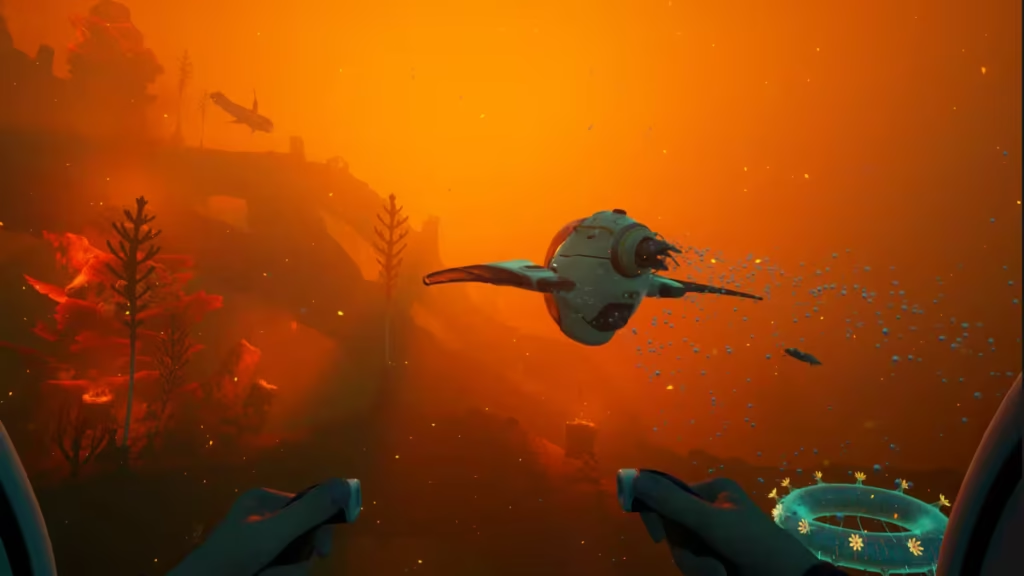
When your ocean turns orange and a heat warning appears on screen, you have entered the Graveyard or Sulfur Pyres zone. This is the hot biome of Coral Gardens, marked by burning sulfur columns and fiery red water. Do not come here until NoA directs you and you have the Heat Tolerance adaptation unlocked.
Gold and Sulfur both spawn here in solid quantities once you can survive long enough to mine them. The Tadpole Pens mission takes place in this zone. There is also an underground Hot Cave that goes deep, and a Tadpole Diver is strongly recommended before you attempt it.
Subnautica 2 Karakorum Region
The Karakorum region sits far to the east of the Lifepod. To reach it, head approximately 1,000 meters east (ideally inside a Tadpole Diver to preserve oxygen). As you approach the Zezura Desert hot zone and beyond, stay close to the seafloor to avoid Leviathan encounters near the surface. The structures here dwarf anything in Coral Gardens in both scale and complexity.
Axum Observatory (Axum Towers)
- Depth: 150 to 400 meters
- Location: Begins approximately 1,200 meters east of the Lifepod
- Notable: Alien Generator required for entry
The first thing you notice in Karakorum is the single alien tower that breaks the surface of the water. This is the Axum Observatory, an abandoned structure the aliens used to study weather and sky conditions. The entrance at the tower base requires an Alien Generator to open, so you cannot go inside until you track one down. The Rosetta Stone, a tall black-and-green structure covered in alien script, sits just a short swim from the Observatory and is likely a key piece of the game’s lore progression.
Needler Nest
- Depth: 226 meters
- Location: Northeast area, roughly below the Axum Observatory
- Resources: Ores and various materials
- Dangers: Hostile Needler Mangos
A habitat zone for Needler Mangos, which are aggressive and will attack on sight. That said, the Needler Nest is worth the risk for the ore and resource density packed into the area. Clear the threats and farm efficiently.
Hot Cave (Karakorum)
- Depth: 200 to 350 meters
- Location: Below the Sulfur Pyres and Coral Desert zones, also present in the Karakorum area
- Resources: Gold
- Dangers: Extreme heat
Bright, sulfur-filled cave systems packed with the same fiery columns found in the Sulfur Pyres above. The Hot Cave Base Camp is located here. Bring a Tadpole Diver and the Heat Tolerance adaptation before going anywhere near it.
Power Plant
- Depth: Below 200 meters
- Location: Further east of the Axum Observatory
- Notable: Requires a specific cybernetic adaptation to interact with alien technology
The alien Power Plant is one of the most technically impressive structures in Subnautica 2’s current Early Access build. The technology inside requires a cybernetic adaptation to operate, which is likely unlocked at the infected Angel Comb near the Axum Observatory. Poor visibility makes this area difficult to navigate without prior knowledge of the layout.
Roots Canyon
- Depth: Below 200 meters (caves reach 300 meters and deeper)
- Location: Further east and slightly north of the Power Plant
Roots Canyon shows clear evidence that Colonists before you were mining here at depth. Dive Elevators still exist in the canyon to reach cave systems at 300 meters and lower. Visibility is very poor, and this area is best approached late game with full equipment.
Universal and Boundary Biomes
These biomes are not tied to a specific region and can appear at the edges or borders of the explorable world.
Sparse Plains
- Depth: 50 to 300 meters
- Dangers: Collector Leviathan
- Resources: Magnetite, Kyanite
A barren, dimly lit expanse with occasional stone formations. The Sparse Plains sits roughly 20,000 to 25,000 units horizontally from the starting area and is home to the Collector Leviathan. Navigate carefully and do not linger without a clear exit route.
The Cliff
- Depth: 50 to 300 meters
- Dangers: Foureye, Nibbler Mango
The Cliff forms the steep world border on most sides of the current map. Once you hit the cliff wall and start descending, you are at the edge of the explorable area. There is usually nothing past it.
Void
- Depth: 400 to 500 meters
- Dangers: Void Leviathan
Pitch black. Featureless. The Void Leviathan patrols here to enforce the map boundary. If you reach the Void, turn back immediately. There are no resources, no structures, and no way to survive an extended encounter with what lives there.
World Tree Region
The World Tree appears in Subnautica 2 but is not accessible in the current Early Access build. Colonist blackboxes scattered throughout Coral Gardens and Karakorum repeatedly reference it as the source of the Proteavirus infecting everything on Proteus. Multiple Colonists in these logs discuss destroying it. Given the pattern of the story, the World Tree is almost certainly where the endgame takes place. Play Now!
Quick Reference: All Subnautica 2 Biomes
| Biome | Region | Depth | Key Resources | Dangers |
|---|---|---|---|---|
| Starting Shallows | Coral Gardens | 0–40m | Titanium, Copper, Quartz | Minimal |
| Stone Pillars | Coral Gardens | 0–100m | Salt, Silver, Sulfur | Nibbler Mango |
| Camp One | Coral Gardens | 0–100m | Silver, Lead | Nibbler Mango, Marrowbreach |
| Old Habitat / Jelly Barrens | Coral Gardens | 0–100m | Lore items | Minimal |
| Stone Mushrooms | Coral Gardens | 0–200m | Crafting materials | Marrowbreach |
| Anemone Hills | Coral Gardens | 0–100m | Necrolei Cysts | Minimal |
| Necrolei Forest | Coral Gardens | 0–100m | Necrolei Cysts | Minimal |
| Sandstone Ridges (Leadzone) | Coral Gardens | Shallow | Lead | Minimal |
| Infested Caves | Coral Gardens | 50–100m | Materials | Bloom Parasites, Marrowbreach |
| Tufa Towers | Coral Gardens | Shallow | Wreck loot | Giant Jaw |
| Cicada Wreck Main | Coral Gardens | 0–250m | Tadpole Fragments | Moderate |
| Coral Desert | Coral Gardens | 50–150m | General | Marrowbreach, Houndgar |
| Sulfur Pyres / Graveyard | Coral Gardens | 0–300m | Gold, Sulfur | Heat, Bloom |
| Axum Observatory | Karakorum | 150–400m | Alien tech | Moderate |
| Needler Nest | Karakorum | ~226m | Ores | Needler Mango |
| Hot Cave | Karakorum | 200–350m | Gold | Extreme heat |
| Power Plant | Karakorum | 200m+ | Alien tech | Moderate |
| Roots Canyon | Karakorum | 300m+ | Mining ores | Visibility, depth |
| Sparse Plains | Universal | 50–300m | Magnetite, Kyanite | Collector Leviathan |
| The Cliff | Universal | 50–300m | None | Foureye |
| Void | Boundary | 400–500m | None | Void Leviathan |
Frequently Asked Questions
Does Subnautica 2 have an in-game map?
No. Subnautica 2 does not include a map, and the developers have confirmed they do not plan to add one. You navigate using the compass at the top of the screen, coordinates in the pause menu, and your Lifepod waypoint in the HUD.
How many regions are in Subnautica 2 Early Access?
As of Version 0.10.0, Subnautica 2 has two confirmed regions: Coral Gardens and Karakorum. A third region, the World Tree, is referenced in the story but is not accessible in the current build.
Where do I find Gold in Subnautica 2?
Gold is found primarily in the Sulfur Pyres (Graveyard) biome in Coral Gardens and the Hot Cave in Karakorum. You need the Heat Tolerance cybernetic adaptation before entering either zone.
What is the deepest biome in Subnautica 2?
The Void is the deepest accessible boundary at 400 to 500 meters. Among story-relevant biomes, Roots Canyon reaches 300 meters and deeper into its cave systems.
How do I unlock the Heat Tolerance adaptation?
Heat Tolerance is obtained from the infected Angel Comb found just south of the Anemone Hills biome. You need the Sonic Resonator to clear the cankers blocking access to it.
What is the Karakorum region in Subnautica 2?
Karakorum is the second major region in Subnautica 2, located approximately 1,000 meters east of your Lifepod. It contains alien structures including the Axum Observatory, Power Plant, and Roots Canyon, and is intended for mid-to-late game exploration.

