A large, active group is one of the most valuable assets you can own online, yet most admins never earn a rupee from it. The reason is simple. Facebook does not hand group owners a paycheck for running a community. You build the income yourself, on top of the free traffic and trust the group gives you.
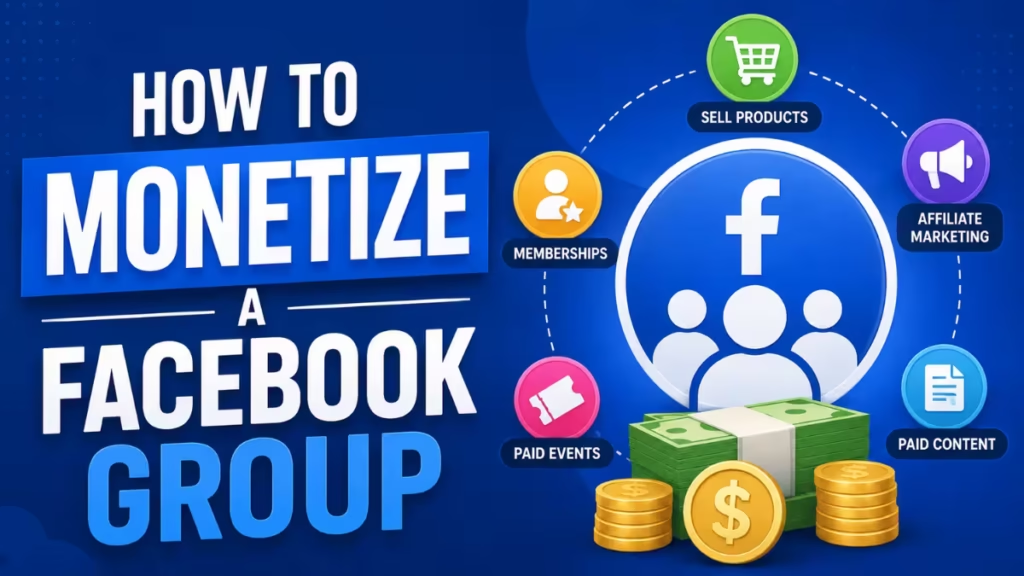
This guide breaks down exactly how to turn a Facebook Group into a real income stream in 2026, which methods convert best, and how to do it without getting your group flagged or shut down.
Does Facebook Pay You for Running a Group?
No. Meta does not pay group admins a salary or share ad revenue based on group activity. There is no “group monetization” button that deposits money into your account.
What Facebook gives you instead is reach, engagement, and a highly targeted audience. Your job is to convert that attention into revenue through your own products, partnerships, and offers.
One indirect route does exist. If you also run a Facebook Page, you can enroll that Page in the Content Monetization Program and share your eligible Page videos and posts into your group. The extra views and engagement from members feed the Page’s performance payouts. The group still does not pay you, but it boosts the asset that does.
Get Your Facebook Group Ready Before You Monetize
Monetization fails when the foundation is weak. Fix these first.
Pick a tight niche: A group about “tech” converts poorly. A group about “fixing Windows update errors” or “budget gaming PC builds” converts far better, because every member shares the same problem. Tight niches let you recommend exact products that members already want.
Screen who joins: Turn on membership questions so you filter out bots and spammers before they enter. Facebook’s own group rules let admins require answers to join, which keeps the community invested and your conversion rates high.
Build trust before you sell: Members buy from admins they respect. Spend the first weeks answering questions, posting useful content, and moderating fairly. Trust is the currency that every method below spends.
The Best Ways to Monetize a Facebook Group
1. Affiliate Marketing
Affiliate marketing is the fastest method to start, because you do not need your own product. You recommend tools or gear you already use, share your tracking link, and earn a commission on every sale.
For physical products, the Amazon Associates program covers almost any niche. For digital products and software, Clickbank and direct software partner programs usually pay far higher commissions, often with recurring monthly payouts.
Three rules keep this profitable:
- Disclose every affiliate link: State clearly that a link earns you a commission. This keeps you compliant with FTC guidelines and protects member trust.
- Build one resource post, not daily link drops: Create a single pinned post titled something like “Tools I Recommend” and put your links there. Daily link spam gets you reported.
- Match the link to a real question: When a member asks what to buy, answer in detail, then add your link. A helpful answer with a link converts. A bare link does not.
2. Sell Your Own Digital Products
The highest margins come from products you create once and sell repeatedly. Think checklists, templates, presets, ebooks, or a structured video course built from your group’s most common questions.
A digital product carries almost no overhead, so nearly every sale is profit. Package the exact knowledge your members keep asking for, price it fairly, and sell it directly to the group and your email list.
3. Run a Paid Membership Off-Platform
You cannot charge a mandatory entry fee through Facebook itself. Instead, use the free group as the top of your funnel and move your most dedicated members into a paid community on a platform you control, such as Patreon, Skool, or a dedicated membership site.
The funnel works in three steps:
- Free group: members join to network and get free value.
- Email capture: you offer a free download, a “lead magnet,” in exchange for an email address.
- Paid tier: you invite your email list and top contributors into a premium space, often priced around $49 per month, for direct access and exclusive resources.
This recurring income stays predictable and scales as the free group keeps feeding new leads in.
4. Land Brand Sponsorships
Once your group has a focused, engaged audience, brands will pay to reach it. Facebook’s native ad system does not place ads inside the group feed, so you negotiate sponsorships directly.
You can collaborate with brands by charging a flat monthly fee to feature them in a pinned post, your cover photo, or a weekly dedicated spotlight. A niche group for local contractors, for example, can charge relevant suppliers a steady monthly rate to be the group’s named partner. You are renting out digital real estate that you fully control.
5. Sell Physical Products Through Facebook Shops
If you sell physical goods or branded merchandise, Facebook Shops lets you set up a storefront linked to your Page. You direct group members to browse and buy without leaving the app, which cuts friction and lifts conversions.
Branded merchandise works best when the design reflects your community’s culture or inside jokes rather than a plain logo slapped on a shirt.
6. Earn Through Live Streams and Stars
If you go live, viewers can send Facebook Stars, a virtual tip where each Star is worth about one cent to you. Stars alone will not replace your income, but during an active live Q&A they add up, and they pair well with promoting a product or membership in the same session.
Turn Your Facebook Group Into a Real Business
Relying entirely on Facebook is risky. You do not own the platform, and an algorithm change or a moderation error can cut your reach overnight. Meta expanded automated moderation in 2026, which means faster decisions but also occasional misfires that can suspend a group’s visibility without warning.
The fix is ownership. Capture member emails, build an audience you control, and treat the group as the discovery layer of your business rather than the whole business. The group brings people in. Your email list and paid platform keep them.
Facebook Group Rules to Avoid Bans and Spam Flags
Aggressive selling is the fastest way to lose a group, so protect it.
Follow a roughly 80/20 balance: keep about 80 percent of your posts as free value and limit monetization to the other 20 percent. Members tolerate selling when they keep getting value for free.
Read Facebook’s community guidelines and spam policy before you scale. Repeated link drops, misleading offers, and posting the same promotion across many groups all trigger spam enforcement. Disclose affiliate relationships, avoid deceptive claims, and you stay safe.
Frequently Asked Questions
Does Facebook pay group admins directly?
No. Facebook does not pay a salary or share ad revenue for group activity. You earn through your own products, affiliate links, sponsorships, and paid off-platform communities.
Can I use affiliate links in a Facebook group?
Yes. Drop them into relevant discussions or a single pinned resource post, always disclose them, and only recommend products that solve a real member problem.
Can a private group be monetized?
Yes, and privacy often helps. A closed, well-screened group earns higher trust and higher conversion rates than a public page, because recommendations feel like peer advice.
Can I charge a fee to join my group?
Not directly through Facebook. Use the free group as a lead source and charge for a premium community hosted on an external platform you control.
How much can a Facebook group earn?
It depends entirely on niche and method. A small, tightly focused group with a digital product and a couple of sponsors can out-earn a large, unfocused one, because conversion depends on relevance, not raw member count.
A Facebook group makes money when you stop thinking like a moderator and start thinking like a business owner. Pick a tight niche, build trust, layer two or three of the methods above, then move your best members onto a platform you own. The group is your traffic engine. The revenue comes from what you build on top of it.

