Apple wants to know whether people actually understand what a health chatbot tells them. On Sunday, the company opened the Apple Health AI Usage Study, a research project with its own iPhone app, and it is recruiting up to 200,000 volunteers in the United States. Apple built the experience, and OpenEvidence, a clinical AI company that many doctors already use, supplies the medical brain behind the answers.
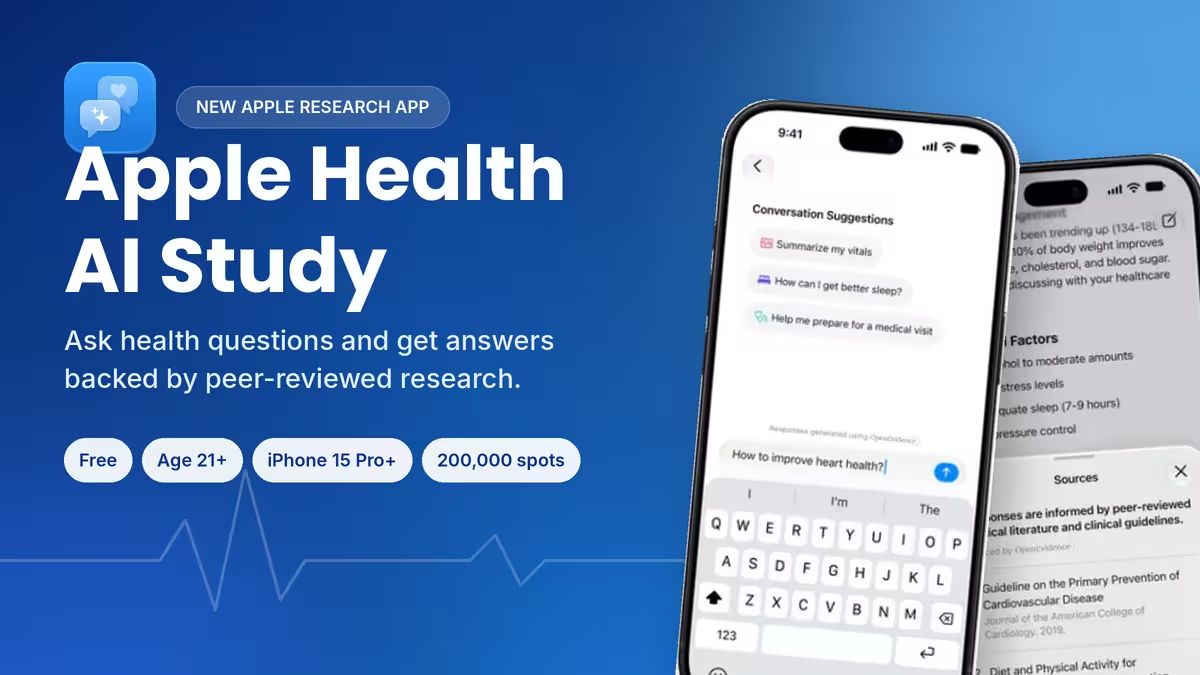
This is a study, not a new Health feature. Apple has not said whether AI answers will ever reach the Health app or Siri. Here is what the app does, who qualifies and how your data moves.
What Is the Apple Health AI Usage Study?
The study lives in a separate app, not inside Health or the Research app. Apple does not test how smart the model is. It tests how people respond. Researchers want to learn whether users understand the answers, how much they trust them, and whether the advice changes what they do next.
A February Oxford study in Nature Medicine shows why that matters. Chatbots named medical conditions correctly in nearly 95% of clinical test cases, yet regular people reached the right answer less than 35% of the time. Apple wants to close that gap between a correct answer and a useful one.
How Does the Apple Health AI Study App Work?
You type everyday health questions, and the app replies in plain language with links to peer-reviewed sources. Participants can ask about general health, specific symptoms, recovery after a procedure and fitness. The app suggests starter prompts such as "Summarize my vitals" and "How can I get better sleep?", and it accepts typed text only, though you can dictate with the iOS keyboard.
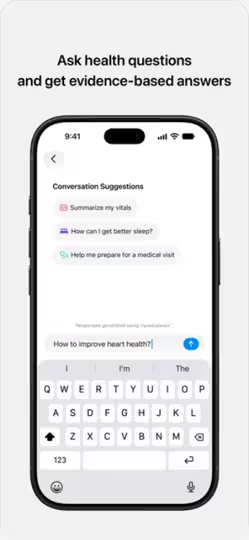
The app also helps you prepare for doctor visits, then sends surveys afterward so researchers can see whether you felt more ready for the appointment. Every answer carries a rating option. You give a star rating, then tag what worked or missed across length, accuracy, level of detail, relevance to your situation, organization and clarity.
Can the App Use Your Health Data and Lab Results?
Yes, but only if you opt in. You decide whether the app sees your personal numbers. If you agree, it can read HealthKit data like resting heart rate, activity and sleep. Someone asking how to lower their resting heart rate, for example, can get advice based on their own readings instead of generic tips.
Lab results need two extra steps. You first import your clinical records into the Health app, then you separately agree to share them with the study. You can skip all of this and still ask general questions.
Apple Health AI Study Eligibility: Who Can Join?
You need to meet all of these conditions:
- Live in the United States
- Be 21 or older (the App Store listing shows an 18+ age rating, but the study itself requires 21)
- Own a compatible iPhone with Apple Intelligence turned on
- Run iOS 26 or later
Apple caps enrollment at 200,000 participants.
Which iPhones Work With the Apple Health AI Study App?
The app needs an Apple Intelligence-enabled iPhone, which means iPhone 15 Pro or newer. Older iPhones do not qualify. The app relies on Apple's on-device foundation models, which sort questions into categories and strip identifying details before anything leaves your phone.
How to Join the Apple Health AI Usage Study
Download the Apple Health AI Study app from the App Store and read the consent screens before you decide. Enrollment starts with informed consent and a demographic questionnaire covering age, race and education. Apple uses those answers to see how different groups prefer to receive health information. An independent review board oversees the study.
You can stay for up to 12 months. Expect a baseline survey, a monthly survey and extra surveys around doctor visits. If you wear an Apple Watch, the app sends check-in reminders with suggested topics. Participants who stop engaging entirely may get removed. Apple also explains the project on its official newsroom page.
Is the Apple Health AI Study App Private?
Your question takes a four-step trip:
- Your iPhone removes details that could identify you.
- A secure study environment run by outside contractor UST Global unlinks the question from your participant ID and screens it again.
- OpenEvidence generates the answer.
- OpenEvidence deletes the question and answer within 24 hours.
Apple says it will not use study data to train AI models, and OpenEvidence will not train on your queries either. A small group of Apple researchers sees coded survey responses, conversation summaries and common topic categories, all separated from personal identifiers. You control whether you share HealthKit data or survey answers.
One detail deserves a close look. The App Store privacy label says some identifiers may be linked to your identity for analytics and app functions, so read it before you enroll.
What Safety Limits Does the App Have?
The app flags certain worrying questions and nudges you toward a doctor or other resources. It does not watch you live. Study staff will not contact you if you type something related to self-harm, so treat the app as an information tool and not a safety net. Apple states clearly that it cannot diagnose or treat conditions or replace a clinician.
What Is OpenEvidence and Why Did Apple Choose It?
OpenEvidence is a clinical AI platform built for healthcare professionals. Full access is still limited to them, and its answers normally use clinical language. The company pulls from licensed material through partnerships with the New England Journal of Medicine, JAMA, Nature, Cochrane and the National Comprehensive Cancer Network.
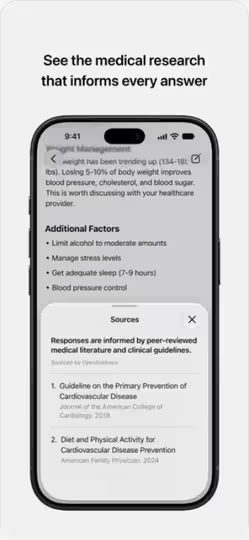
Apple says it picked OpenEvidence for its medical sources, privacy controls and search models. In this study, Apple turns those clinical answers into everyday language with its own technology. The split is clear: a specialist supplies the medical knowledge, and Apple keeps the user relationship and the data experience.
How Apple's Study Compares With ChatGPT and Other Health Chatbots
OpenAI says users ask its chatbot more than 300 million health questions every week, and both OpenAI and Anthropic now offer health-focused features. Apple takes a slower route. It runs a consented study with surveys, ties each answer to cited medical literature and measures comprehension before it commits to a product.
That makes this app a research tool, not a rival launch. The findings could shape how Apple designs any future health assistant, and Apple plans to share its research with the wider field. No results exist yet, and the study has no publication date.
Frequently Asked Questions
Is the Apple Health AI Usage Study free?
Yes. The app is a free download for iPhone, and participation is voluntary.
Can I use the app outside the United States?
No. The study only accepts US residents.
Does my iPhone need to be new?
Yes. You need an Apple Intelligence-enabled iPhone, which means iPhone 15 Pro or later, running iOS 26 or later.
Does the app replace my doctor?
No. It does not diagnose or treat anything. Apple tells participants to check medical information with a doctor or clinician.
Do I have to share my Health app data?
No. Sharing HealthKit metrics and lab results is optional, and you can still ask general questions without it.
How long does the study last?
Each participant can stay for up to 12 months. Apple has not set a publication date for the findings.
Will Apple use my questions to train its AI?
Apple says no. It states that study data will not train AI models, and OpenEvidence deletes questions and answers within 24 hours.