A famous billionaire appears on a YouTube livestream and promises to double any Bitcoin you send. Your company's finance head joins a video call and asks you to move funds urgently. A new online friend shows their face on a quick video chat before pitching a trading app. In each case, AI can fake the person completely.
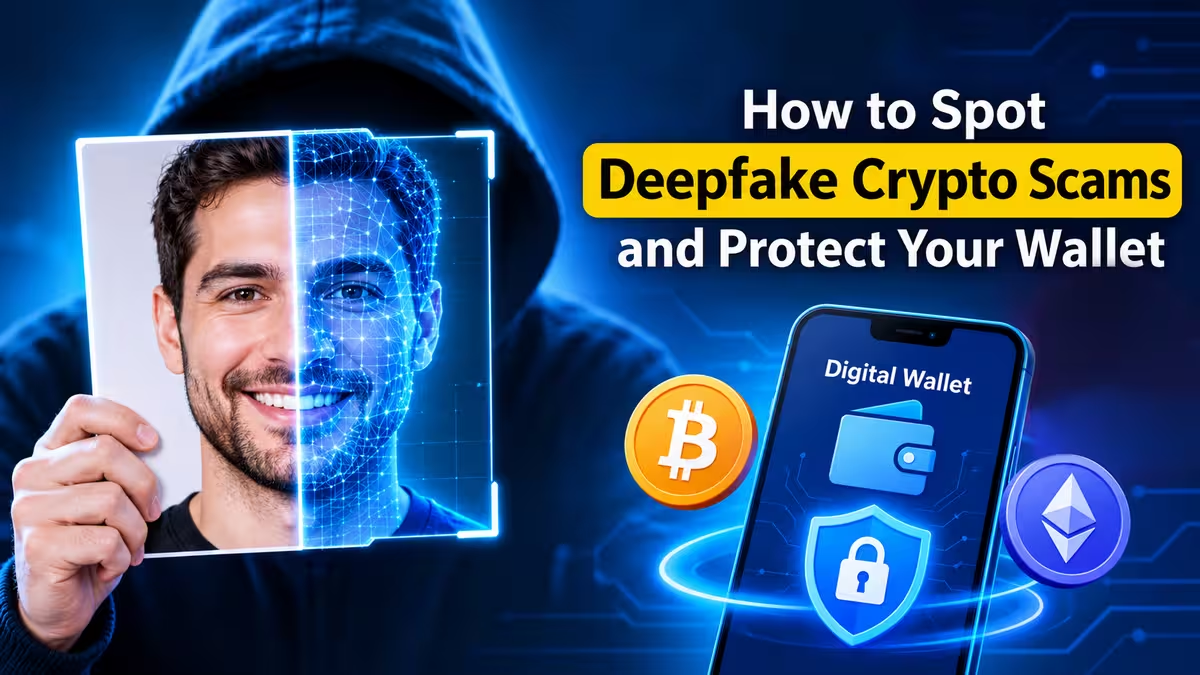
Deepfake technology now lets scammers clone a face and voice from a few public clips. They pair that fake identity with crypto because blockchain transfers settle fast and rarely reverse. This guide shows you how these scams operate, which signals expose them, and how to lock down your wallet before and after an attack.
What Is a Deepfake Crypto Scam?
A deepfake crypto scam uses AI-generated video or audio to copy someone you trust and push you to send crypto, share credentials, or install malware. The copied person can be a celebrity, an exchange agent, a coworker, a government official, or an invented customer who "earned" huge profits. Attackers build the fake from public photos, social media clips, and recorded calls, so almost anyone with an online presence can be cloned.
Why Deepfake Crypto Scams Work So Well
Crypto gives fraudsters three advantages. Transfers move across borders in minutes, no bank can claw them back, and wallet addresses hide the receiver's real identity. Deepfakes add the missing piece: trust. When victims see a familiar face and hear a familiar voice, they stop asking questions.
The damage keeps growing. The FBI's Internet Crime Complaint Center logged more than 181,000 crypto-related complaints for 2025, with reported losses above USD 11 billion. The same report counted over 22,000 complaints tied to AI, worth nearly USD 893 million. Real numbers sit higher, since many victims never report.
Types of Deepfake Crypto Scams to Watch For
Fake Celebrity Giveaway Streams
Scammers hijack verified YouTube channels, rename them after a tech brand, and run looping livestreams. A synthetic Elon Musk, Vitalik Buterin, or exchange CEO announces a "limited giveaway." A QR code on screen points to a wallet. The pitch never changes: send coins and get twice as much back.
Impersonated Colleagues on Video Calls
In early 2024, an employee at engineering firm Arup in Hong Kong joined a video meeting with what looked like the company's CFO and several coworkers. Every other participant was a deepfake. The employee followed instructions and wired about USD 25.6 million. Crypto teams, DAO members, and startup founders face the same trick through fake Zoom or Teams invites.
Fake Trading Platforms With AI Testimonials
Some operations build full investment websites with fabricated dashboards and rising balances. AI-generated "customers" post video testimonials about easy profits. Call center staff then push victims to deposit more. When victims try to withdraw, the platform demands a tax or unlock fee first.
Romance and Long-Con Schemes
Pig-butchering scammers spend weeks building a relationship over chat. A short deepfake video call convinces the victim that the person exists. The "partner" then introduces a crypto platform they supposedly profit from.
Cloned Voices on Phone Calls
Voice cloning needs only seconds of recorded audio. Scammers use it to pose as a relative in trouble, an exchange support agent, or a fund manager who needs a fast transfer.
Fake Official Announcements
Some videos copy the look of a press conference, complete with flags and podiums. A fake regulator or minister warns that a new law will freeze wallets unless users move funds to a "secure" address.
How a Deepfake Scam Unfolds From First Contact to Payout
Most attacks follow the same six steps:
- Bait. You see a livestream, ad, or meeting invite that features a trusted face.
- Credibility. Fake comments, a polished website, and a verified-looking channel make the offer feel real.
- Pressure. A countdown, a limited slot, or a "security emergency" pushes you to act fast.
- Payment. You send crypto to a wallet address or QR code, or you approve a transaction.
- Escalation. The scammer demands more through a fee, a "tax," or a bigger deposit. Some calls also trigger a fake "driver update" that installs malware.
- Spread. In meeting-invite attacks, the criminals use your hijacked account to target your contacts next.
You can break the chain at step 3 or 4 by pausing and verifying through a second channel.
Warning Signs of a Deepfake Crypto Scam
AI video quality improves every few months, so visual glitches make a weak defense. The request almost always gives the scam away. Watch for these signals:
- Send first, receive more later. No genuine company, exchange, or public figure runs a "send one, get two" offer. Treat every doubling promise as fraud.
- Countdown pressure. Timers, "last 50 spots," and "act in the next hour" exist to stop you from checking.
- Requests for secrecy. A real executive never asks you to hide a transfer from your team.
- Only one source. Major announcements appear on official websites, verified accounts, and mainstream crypto news at the same time. A single stream with no coverage elsewhere tells you everything.
- Locked or bot-filled comments. Fake streams disable chat or flood it with "I just got my BTC back!" messages.
- Requests for your seed phrase or codes. Support staff never need your seed phrase, private key, or 2FA code.
- Surprise withdrawal fees. A platform that blocks your exit until you pay a fee holds your money hostage.
How to Spot a Deepfake Video or Cloned Voice
Technical tells still help as a second layer, especially on live calls. Look for:
- Blurring or flicker where the hair, ears, and jawline meet the background
- Lighting on the face that does not match the room
- Lips that trail the audio by a split second
- Blinking that looks rare, robotic, or missing
- A voice with no breathing, no room echo, and oddly smooth pacing
- Repeated gestures that loop every few seconds
On a pre-recorded clip, pause at random frames and zoom in on the mouth and eyes. Artifacts often show in still images even when the motion looks smooth.
How to Verify a Suspicious Video Call
If something feels off during a video call, ask the other person to:
- Turn their head fully sideways. Many real-time face swaps distort at a profile angle.
- Pass a hand slowly across their face. The overlap often exposes broken edges.
- Hold an object with printed text near their face. AI video tends to warp the text.
- Answer a question only the real person knows. Better yet, agree on a code word with close colleagues and family in advance.
Then end the call and contact the person through a channel you already trust, such as a phone number saved in your contacts. Never call back the number or link the caller provides.
How to Protect Your Crypto Wallet From Deepfake Scams
Verify Through a Second Channel
Treat any money request that arrives by video, voice, or chat as unconfirmed. Type the exchange or project URL yourself and check for the announcement there. Join Zoom or Teams meetings through the desktop app using a meeting ID instead of clicking invite links. Read every domain letter by letter, since scammers register look-alikes such as "zoom-meet.us."
Lock Down Keys and Accounts
- Keep large holdings on a hardware wallet that stores keys offline.
- Turn on two-factor authentication for every exchange and wallet. Use an authenticator app instead of SMS.
- Protect your chat apps too. Enable MFA on Telegram, Discord, and Slack so scammers cannot hijack your account and target your contacts.
- Use a password manager. It refuses to autofill on a fake domain, which gives you an early warning.
Review Wallet Approvals
A hardware wallet cannot stop you from signing a bad transaction. Review your dApp token approvals regularly with a tool like Revoke.cash and remove any you do not recognize.
Slow Down
Set a personal rule: wait 24 hours before sending crypto in response to any urgent request. Scammers depend on panic and excitement. A pause destroys their advantage.
Never Run Code During a Call
Fake meetings often trigger a "driver update" or "audio fix" prompt. Real software updates never arrive through a meeting window. Close the call instead of clicking.
What to Do If You Already Sent Crypto to a Scammer
Act fast. The first few hours matter most.
- Stop all payments. Ignore promises that one more deposit will release your funds.
- Revoke wallet approvals and move any remaining assets to a new wallet address.
- Isolate your device if you installed or ran anything, then scan or reset it.
- Change passwords on your exchange, email, and chat apps, and sign out of all other sessions.
- Save evidence: wallet addresses, transaction hashes, screenshots, stream links, and messages.
- Contact the exchange that received or sent the funds. Exchanges can sometimes freeze deposits that land in their custody.
- File a report. US victims can use the FBI's IC3 portal and the FTC's ReportFraud site. UK victims can report through Action Fraud. Others should contact their national cybercrime unit.
- Warn your contacts if a scammer used your hijacked account, so the chain stops with you.
Ignore anyone who contacts you offering to recover your crypto for an upfront fee. Recovery scammers specifically target people who just lost money.
Frequently Asked Questions
Can AI fake a live video call?
Yes. Real-time face-swap and voice-cloning tools work on live calls today. Some attackers also replay old webcam footage of a hacked contact, which looks perfectly natural.
Is a celebrity crypto giveaway ever real?
No. No well-known figure or legitimate company asks you to send crypto first so they can send back more. Treat every such offer as a scam.
Does a hardware wallet stop deepfake scams?
Only partly. It keeps your private key away from malware, but it cannot stop you from approving a transaction after a scammer fools you. Verification habits matter just as much.
Can deepfake detection tools catch every fake?
No. Detection tools help, but none works with full accuracy. Use them as one check alongside independent verification through trusted channels.
Can I get my crypto back after a deepfake scam?
Recovery is possible but uncommon. Fast reporting to the exchange and authorities gives investigators using blockchain analytics the best chance to trace or freeze funds.