A message pops up from a number you don't know. "Hi Jenny, are we still meeting at the café at 6?" You don't know any Jenny, so you type a quick "Sorry, wrong number" and move on with your day.
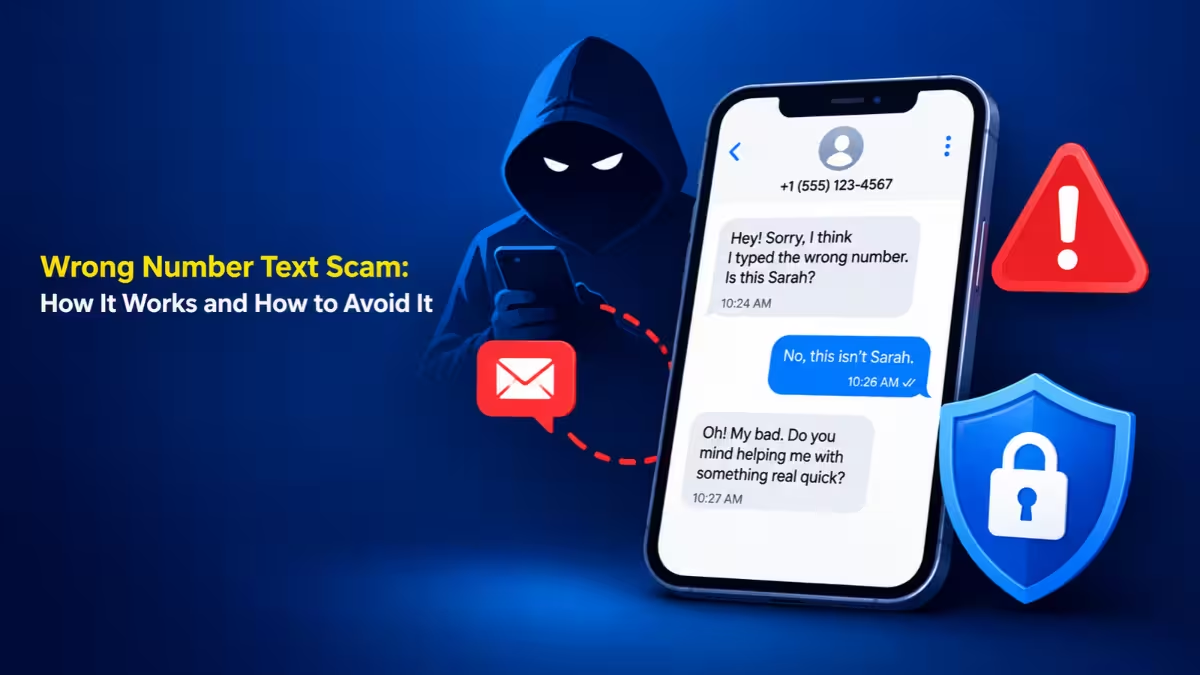
That polite reply is exactly what the sender wanted. Scammers send these fake mistakes on purpose, and your answer tells them a real, friendly person sits on the other end. What follows can run for weeks and end with a drained savings account.
This guide breaks down how the scam unfolds, which signs give it away, and what you should do whether you ignored the text or already chatted with the stranger.
What Is a Wrong Number Text Scam?
A wrong number text scam is a social engineering trick. The sender pretends to have messaged the wrong person so you reply, and then uses that opening to start a conversation with you.
Most scam texts push a link or a deal right away. This one does the opposite. The first message looks boring and harmless, with no link, no prize, and no urgent warning. That plain look lowers your guard, which makes it far more effective than a typical spam blast.
Why Do Scammers Send Wrong Number Texts?
Sending millions of texts costs scammers almost nothing. They pull numbers from data breaches, buy lists from data brokers, or generate them in bulk. A fake mistake works as a cheap filter:
- It confirms your number is live. Even a one-word reply proves a person reads messages on that line. Scammers can reuse your number or sell it to other crooks.
- It finds people willing to talk. Anyone who keeps chatting with a stranger moves to the next stage.
- It builds a profile. Small talk about your job, city, family, and hobbies hands them material for a tailored pitch.
AI tools now write these messages in clean, natural English and churn out endless variations. The old clue of broken grammar no longer helps much. Bots often handle the first few replies, and a human operator steps in once you seem hooked.
How Does a Wrong Number Text Scam Work Step by Step?
Stage 1: The bait
The scammer sends a vague or slightly personal text addressed to someone else. Some lean on emotion, such as a funeral update, a sick pet, or a stranded friend, so you feel bad ignoring it.
Stage 2: The friendly pivot
You point out the mistake. A real person would say "Oops, sorry" and vanish. The scammer instead apologizes warmly, compliments you for being kind, and asks a follow-up question. "You seem really nice. Where are you based?"
Stage 3: Building trust
Within a few days, the daily check-ins start. "Good morning! Did you eat breakfast?" The person shares photos, often polished pictures of an attractive, successful professional with luxury bags, golf outings, or fancy dinners. Some conversations turn romantic. Others feel like a warm friendship. Either way, the scammer works to become part of your routine.
Stage 4: The pitch
After weeks of chat, money enters the story. The most common version is a crypto investment. Your new friend mentions an uncle or mentor who made a fortune trading, then offers to show you how. Other versions include a sudden emergency, a medical bill, a job offer, or a request to "hold" funds.
Stage 5: The squeeze
In investment scams, the fake platform shows big gains on your first deposit. That success pushes you to invest more, sometimes with loans or money borrowed from family. When you try to withdraw, a "tax" or "unlock fee" suddenly appears. You pay it, another fee follows, and eventually the person and the platform both disappear.
This long con has a name: pig butchering. The scammer "fattens" the victim with trust before taking everything.
Why Do Scammers Move the Chat to WhatsApp or Telegram?
Within a few days, the stranger suggests switching apps. They might claim their SMS plan is limited or they travel a lot. The real reasons work in their favor:
- Carriers can't see the conversation. Your carrier monitors SMS and acts on reports to 7726. Encrypted apps take that safety net away.
- They gain extra tools. Polished profile photos, disappearing messages, and group chats full of fake "investors" make the story look real.
- They can run many chats at once. Teams split the work and keep dozens of victims warm at the same time.
Treat any early request to leave SMS as a major red flag.
Wrong Number Scam Text Examples
Scammers use thousands of variations. None of these would look strange coming from someone you know, which is why they work:
- "Hey, are you free for lunch tomorrow?"
- "Is this Daniel? It's Mia from the gym."
- "Did you get home safe last night?"
- "Hello, I found this number in my contacts but no name shows up. Who is this?"
- "Are u busy?"
- "Can you break away for a second?"
- "Your test results are ready, please call back."
- "Sorry to bother you, I think I have the wrong person. Hope you're having a great day!"
Some openers add urgency, like a ride request, an airport pickup, or an appointment confirmation. Others sound casual and warm. All of them aim for one thing: a reply.
Warning Signs of a Wrong Number Text Scam
Watch for these signals:
- They keep talking after you correct them. This is the biggest tell. Genuine senders stop after one apology.
- Instant compliments or flattery. "You're so kind, not many people reply."
- Personal questions too soon. Your work, income, location, marital status, or kids.
- A push to switch apps. Any early request to move to WhatsApp, Telegram, or another platform.
- Photos that look too perfect. Studio lighting, no casual shots, images that could belong to a model or influencer.
- Hints of wealth. Expensive hobbies, travel, and casual mentions of trading profits.
- Any talk of crypto, gift cards, or investing. Treat it as a scam the moment it shows up.
- Links, files, or QR codes. These can lead to phishing pages or install malware.
- Guilt when you pull back. "I thought we were friends" is a manipulation tactic.
- An unfamiliar area code. International codes or a spoofed local number that doesn't match their story.
What Should You Do If You Get a Wrong Number Text?
The safest move is simple: don't reply at all.
If a real friend lost your number, they will find another way to reach you. Delete the message, or block the sender if the texts keep coming.
Worried the message might come from someone you actually know? Contact that person through a number you already have saved, or ask a mutual friend. Never confirm anything through the unknown number.
How to Block and Report Wrong Number Scam Texts
- Block the number. On iPhone, tap the sender's name, open the info screen, and choose "Block this Caller." On Android in Google Messages, open the three-dot menu and tap "Block & report spam."
- Report it. In the US, UK, and several other countries, forward the text to 7726 (SPAM) so your carrier can flag the sender. The "Report Junk" option in your messaging app also helps.
- File a complaint if needed. US residents can report scams at ReportFraud.ftc.gov.
- Screenshot before you delete. Keep the sender's number and messages in case you need evidence later.
- Turn on built-in spam filters. On iPhone, open Settings, tap Messages, and enable "Filter Unknown Senders." On Android, open Google Messages settings and switch on Spam Protection.
What Happens If You Reply to a Wrong Number Text?
If you only replied once
Don't panic. A single reply doesn't put your bank account at risk. You may get more spam for a few weeks because your number now looks active. Block the sender, ignore follow-ups, and move on.
If you chatted for a while
Stop responding right away and block the number. Don't announce that you plan to report them, since that only invites more pressure. Scroll back and note what you shared, such as names of family members, your employer, your city, or your daily routine. Warn anyone you mentioned so they can ignore strange contact.
If you clicked a link or shared personal data
Act fast:
- Change your passwords from a trusted device, starting with your email account.
- Turn on two-factor authentication everywhere you can.
- Check bank, email, and social media accounts for unknown logins or transactions.
- Call your bank if you shared any card or account details.
- Place a fraud alert or credit freeze if you gave out your address, date of birth, or ID numbers. In the US, contact Equifax, Experian, and TransUnion.
If you sent money
Contact your bank or payment app immediately and ask about a recall or fraud review. In the US, report the loss at ReportFraud.ftc.gov and file a complaint with the FBI's Internet Crime Complaint Center (IC3).
Stay alert afterward. Scammers often target victims a second time with "recovery" services, posing as lawyers, investigators, or hackers who promise to get your money back for a fee. That is another scam.
Who Do Wrong Number Scammers Target?
Anyone with a phone can receive these texts. Scammers still lean toward certain groups:
- Older adults who tend to reply politely to strangers
- People who recently lost a partner or live alone
- Anyone who posts personal details publicly on social media
- People who mention being past scam victims online
Talk about this scam with parents, grandparents, and less tech-savvy friends. A two-minute warning can save them a fortune.
Can a Wrong Number Text Hack Your Phone?
In almost every case, no. Simply receiving a text won't install anything on your device. The danger comes from what you do next: tapping a link, downloading a file, scanning a QR code, or handing over codes and passwords. Keep your phone's software updated to close the rare security holes that do exist.
How to Protect Yourself From Wrong Number Text Scams
- Don't reply to texts meant for someone else
- Block and report unknown senders
- Never move a chat with a stranger to WhatsApp or Telegram
- Treat every crypto or investment tip from an online contact as a scam
- Never send gift cards, crypto, or payment app transfers to someone you haven't met
- Share as little personal information online as possible
- Keep spam filters switched on
Wrong number text scams work because they turn good manners into a weakness. The fix costs you nothing: skip the reply, block the number, and report it. Kindness belongs with people you actually know, not with a stranger who "accidentally" landed in your inbox.
Frequently Asked Questions
Is it safe to reply "wrong number" to a random text?
It's better not to. Even a short correction confirms your number is active and may start a scam conversation. Block the sender instead.
Why do they keep texting even when I don't answer?
Automated systems send messages on a schedule whether you reply or not. Silence doesn't stop the sequence, so block the number.
What if the wrong number text includes an emergency?
Don't act on the message itself. Look up the person, police department, or organization through an official website or a number you already trust, then verify the story there.
Can scammers use my phone number for other fraud?
Yes. A confirmed number can end up on lists sold to other scammers and used for phishing calls, smishing waves, or spoofed caller ID tricks.
How can I tell a real wrong number from a scam?
A real wrong number usually ends after one apology. If the sender keeps the chat going, gets personal, or suggests switching apps, treat it as a scam.
Related Guides
- Binance P2P Scam Explained: Flash USDT, AML Bots & How Victims Are Losing Crypto
- Crypto AML Scam Draining Wallets Explained: How to Avoid P2P Trading Frauds
- WhatsApp Rolled out Passkeys: A More Secure and Convenient Way to Protect Your Account
- WhatsApp launches Chat Lock feature to hide our private conversations | New privacy Update